
Module Two: Circular Economy 101
Contents
Video
What is the Circular Economy?
Resources/Links
Professional Development Points
Quiz
Video
What is the Circular Economy?
According to the Ellen MacArthur Foundation (a global leader in the field), the circular economy is defined as:
“A system where materials never become waste and nature is regenerated. In a circular economy, products and materials are kept in circulation through processes like maintenance, reuse, refurbishment, remanufacture, recycling, and composting.”
Furthermore:
“The circular economy is based on three principles, driven by design:
Eliminate waste and pollution
Circulate products and materials (at their highest value)
Regenerate nature”
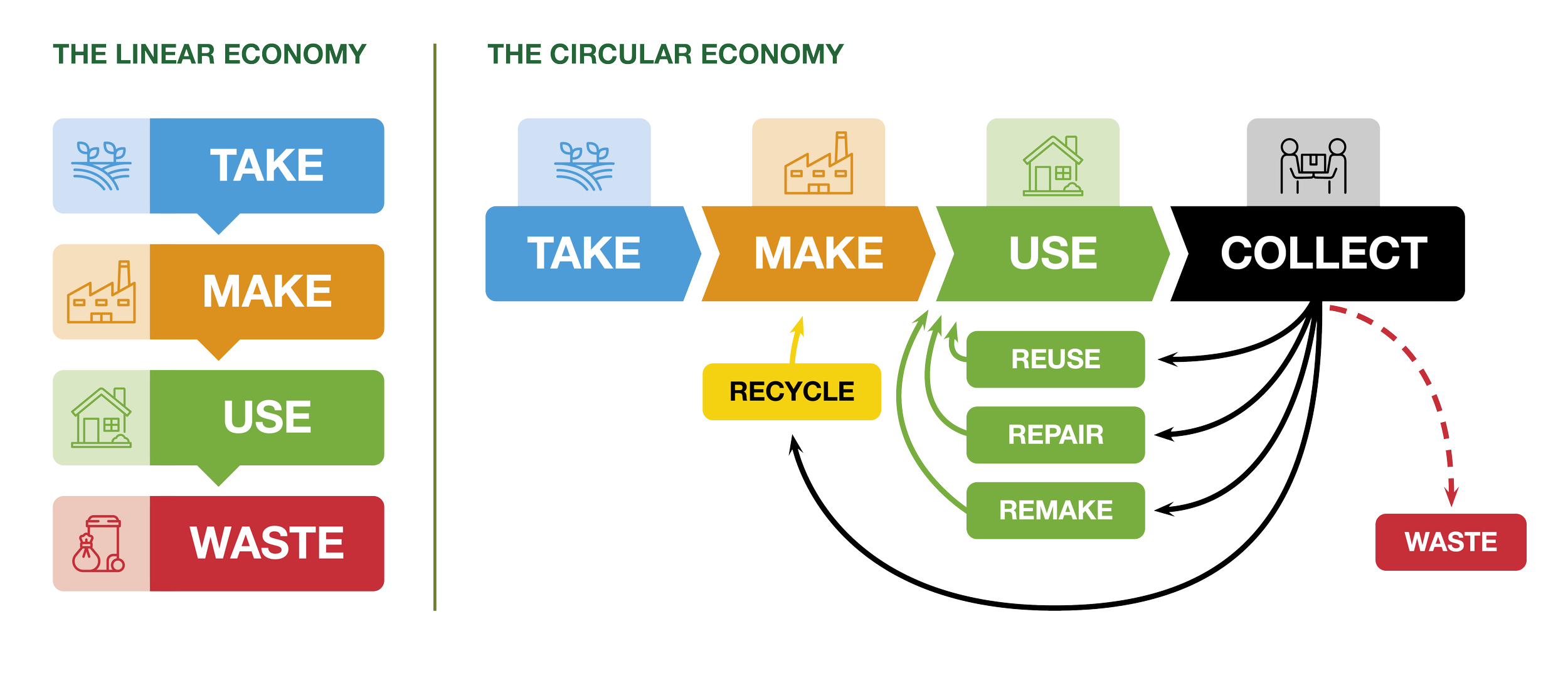
These principles apply to all businesses, industries and personal behaviour — and that includes building and construction. However, as we saw in the video, we need to start moving away from the Linear Economy, or a take-make-use-waste system, and toward the Circular Economy.
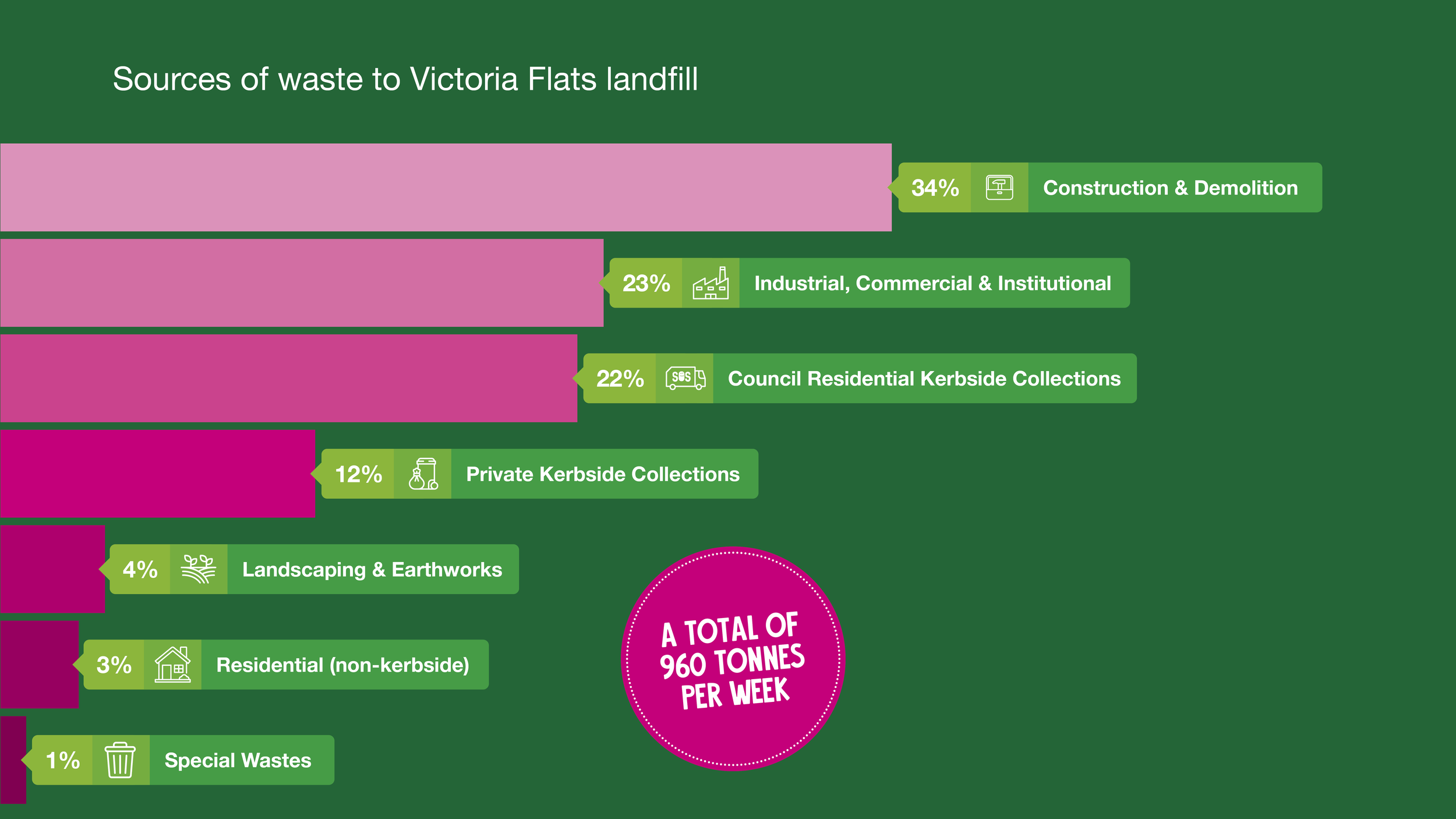
Did you know that construction and demolition (C&D) waste makes up the largest source of waste in the Queenstown Lakes district? A 2024 waste audit found about 34% of all waste is from C&D, that’s about 309 tonnes per week going to the regions only landfill!
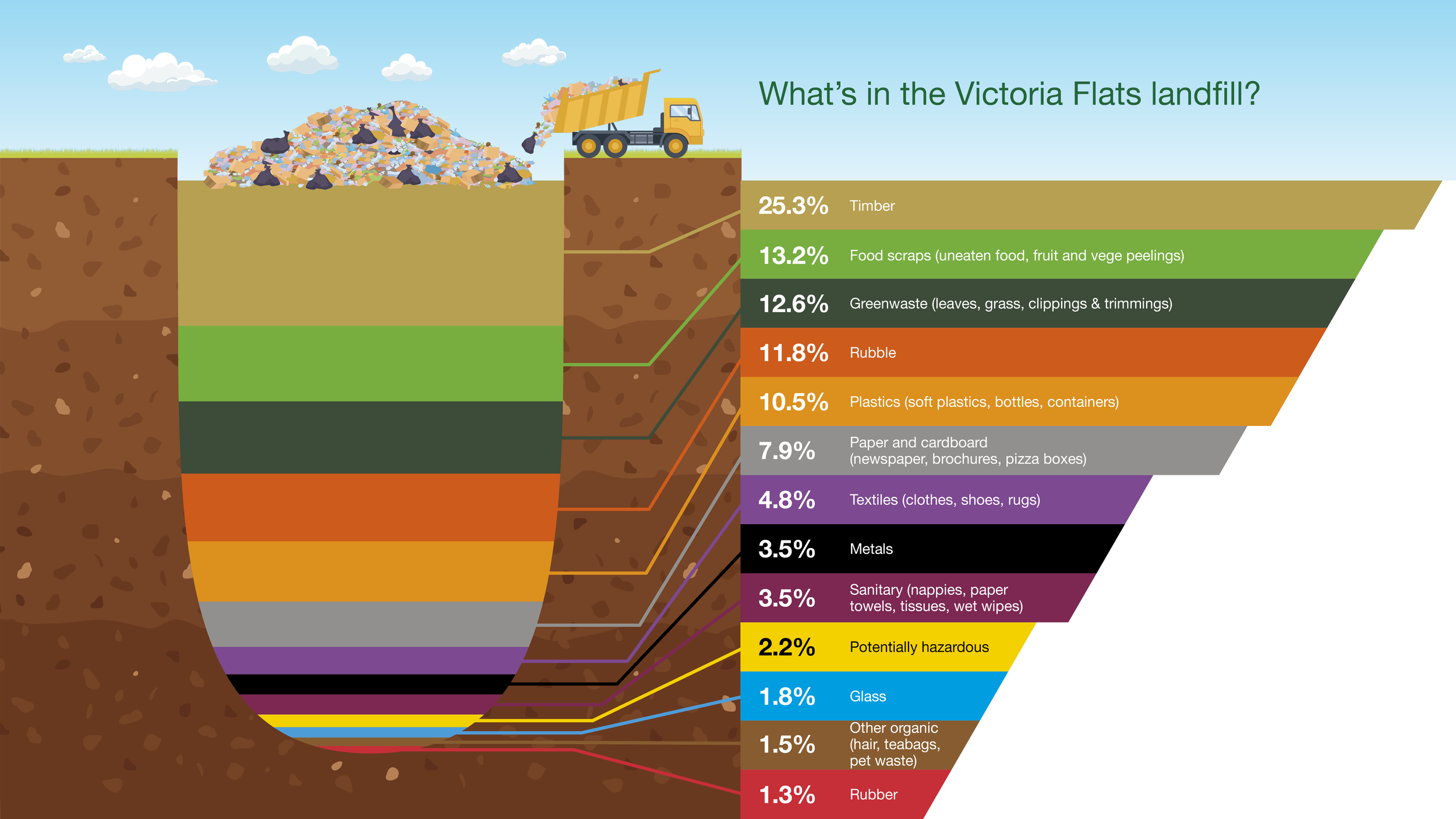
The same audit managed to break down waste even further. It found timber and rubble as the most commonly wasted materials from the construction industry. Timber even coming in at the largest source of all waste in the district, at over 25%!
We need to start slowing the flow of waste to landfill. When it comes to best practice, a strong place to start is with the Waste Hierarchy:
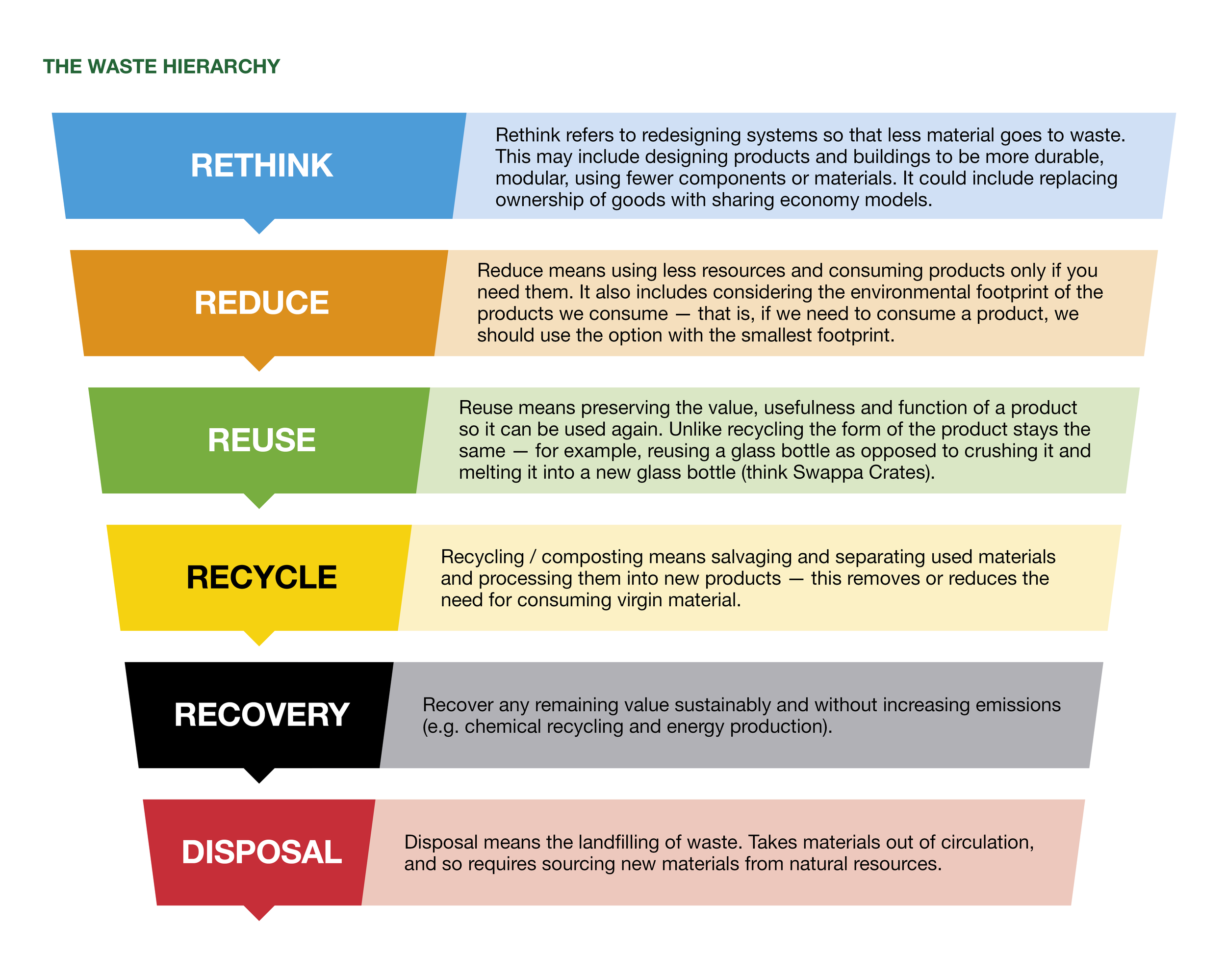
The hierarchy descends from most important to least, with Rethink being the most important to consider and Disposal the least. At all stages of a build and across all industries, the Waste Hierarchy should be considered and applied.
Recycling often gets the most attention, but as the Waste Hierarchy shows, it actually sits lower in priority than rethinking, reducing, and reusing materials in the first place. That said, recycling is still better than sending waste to landfill — it's about working your way down the hierarchy before you get there.
For example, if you can design out waste from the beginning (Rethink) before you even start building, that’s where you’ll find you can Reduce the most.
A great local example comes from Cook Brothers, who carried out a comprehensive waste audit on The Mill, a commercial sports gym project in Queenstown. National Sustainability Manager Kristy Jones oversaw the audit from inception through to completion, tipping out over 30 skip bins to analyse the data.
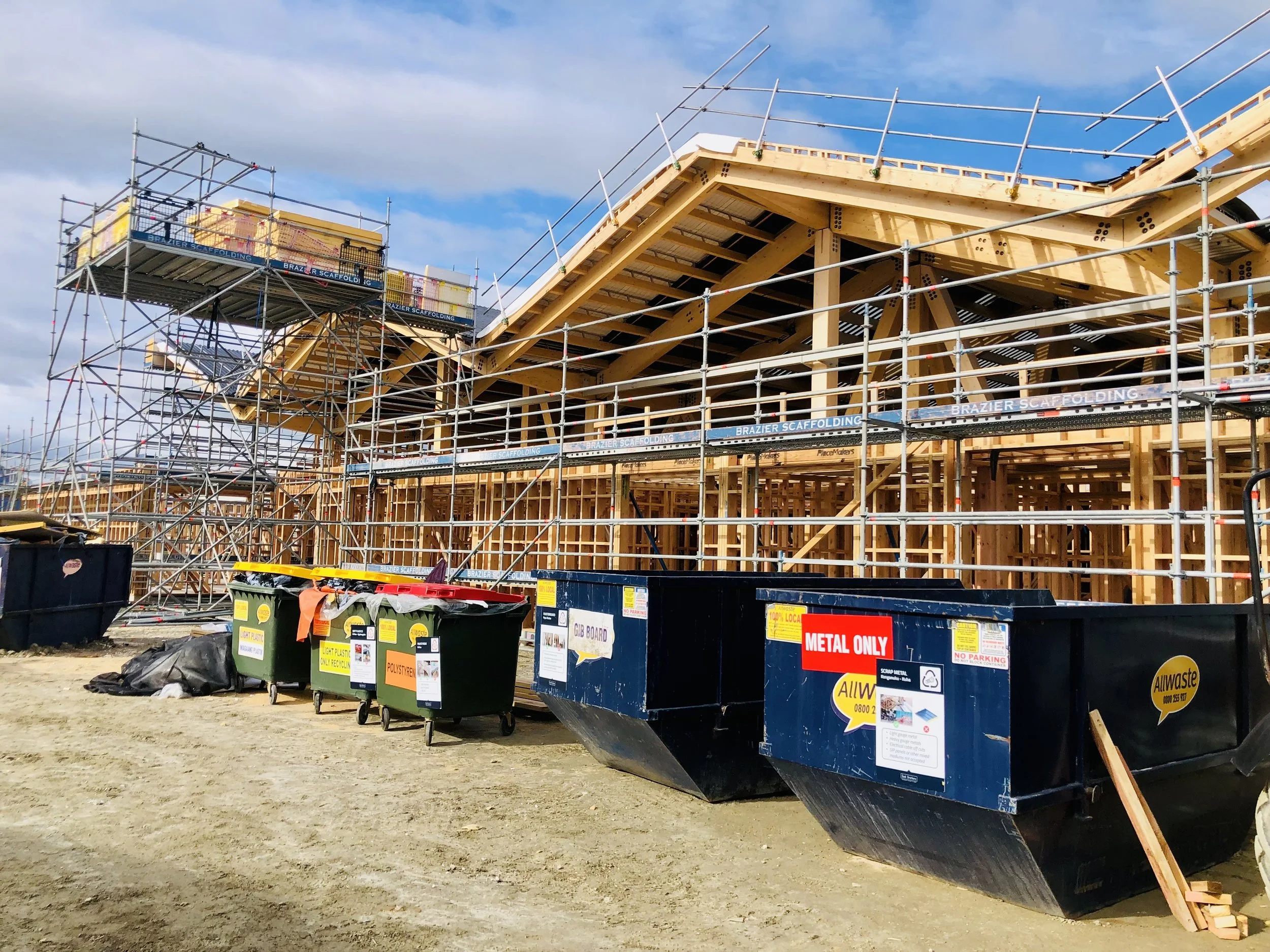
The results were incredible: detailed information on waste by volume and weight, where it was coming from and at what stages of the build it was being generated.
Jones found that if they had made different decisions at earlier stages they could have reduced site waste by up to 30-40%…that’s huge!
While it’s good to think about the waste hierarchy, the circular economy is an entire system going beyond waste and into system wide practices.
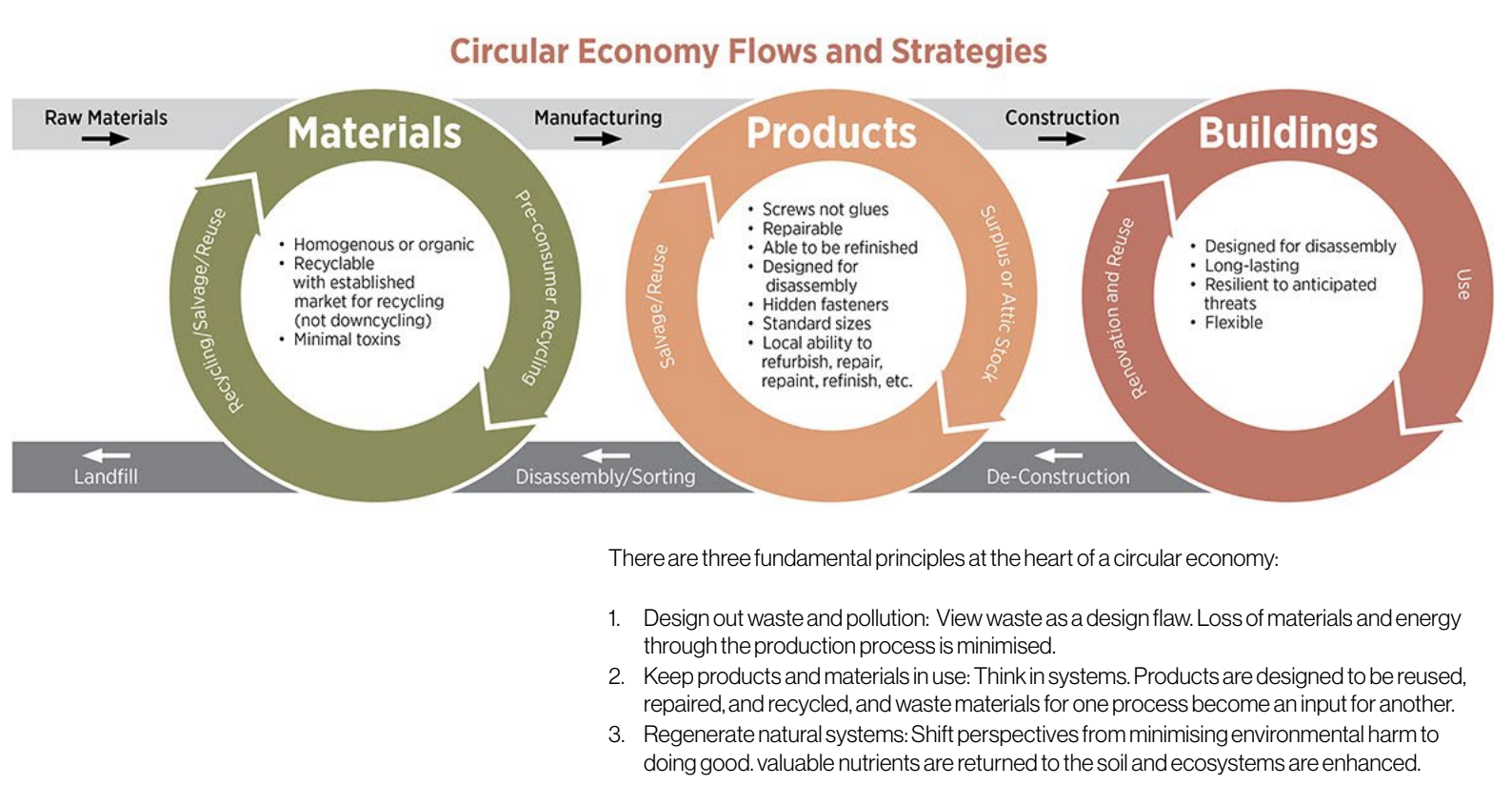
Circular strategies in the building industry can be thought of in 3 different categories: materials, products, and buildings.
Check out the image below to see a few strategies for implementing circular practices across the building industry and the different stages of a build or building.
Across Aotearoa there are a host of projects in the construction industry focused on circular economy principles. Locally, check out the Wānaka Community Workshop, the Arrowtown Men’s Shed, or Naylor Love’s Queenstown Upcycling Station.
The construction industry has a lot of influence on our built environment, and in turn on our communities. We need the industry as a whole to understand the damaging effects the linear economy can have and how important it is to start implementing circular economy practices.
Professional Development Points
Completing this training module is eligible for professional development points. To complete the module, make sure you have:
Watched the short video
Read the webpage content
Checked out the links and resources on the page
Completed the quiz
Licensed Building Practitioner Points:
Available to all participants. Log your points directly after completing the module — 1 hour of learning equals 1 LBP point. This module is estimated at 0.5 hours.
Continuing Professional Development Points:
Available to NZIA members only. This module is eligible 5 CPD points. Once you submit your quiz, NZIA will be notified.