
Understanding the Energy System We Built Our World On, and What Comes Next.
Making Sense of Troubling Times: By Monique Kelly
This piece may feel a little overwhelming, but to find solutions we first need to understand the problem. It will run through the challenges we’re facing, but most importantly some of the solutions we can start to put into practice. There are lots of links for those who want to find out more. Some of it is technical so please jump that section if you feel the need. Make sure that if you do feel overwhelmed, reach out to a friend for a good chat, go for a walk in nature, get out and do some physical work, watch a feel-good movie, go for a run or do a sudoku. Whatever you need to do to settle your mind. It is a long read so before you start, put the kettle on and make yourself a cuppa, take a big breath, exhale and know that we will be ok. Humans have an incredible capacity to adapt to change.
WHAT IS ENERGY AND WHY DOES IT MATTER
Quick Facts to Understand Energy
Scientists describe energy as the ability to do work. In economic systems, energy is commonly classified into two broad categories: renewable and non-renewable. Non-renewable sources currently dominate, particularly fossil fuels such as petroleum, coal, and natural gas, as well as nuclear energy in some countries. Renewable sources including solar, geothermal, wind, biomass, and hydropower are playing an increasingly important role as energy systems transition.
Primary energy is energy in its raw form before any conversion (like coal, oil, sunlight, or wind). Secondary energy is what we get after it’s been converted into something usable, like electricity or fuel.
Fossil fuels are essentially stored ancient solar energy. Millions of years ago, plants and marine life captured energy from the sun. Over time, heat and pressure turned this into oil and gas. Think of it as a single use “ancient solar battery.”
Oil Underpins Every Part of Economy
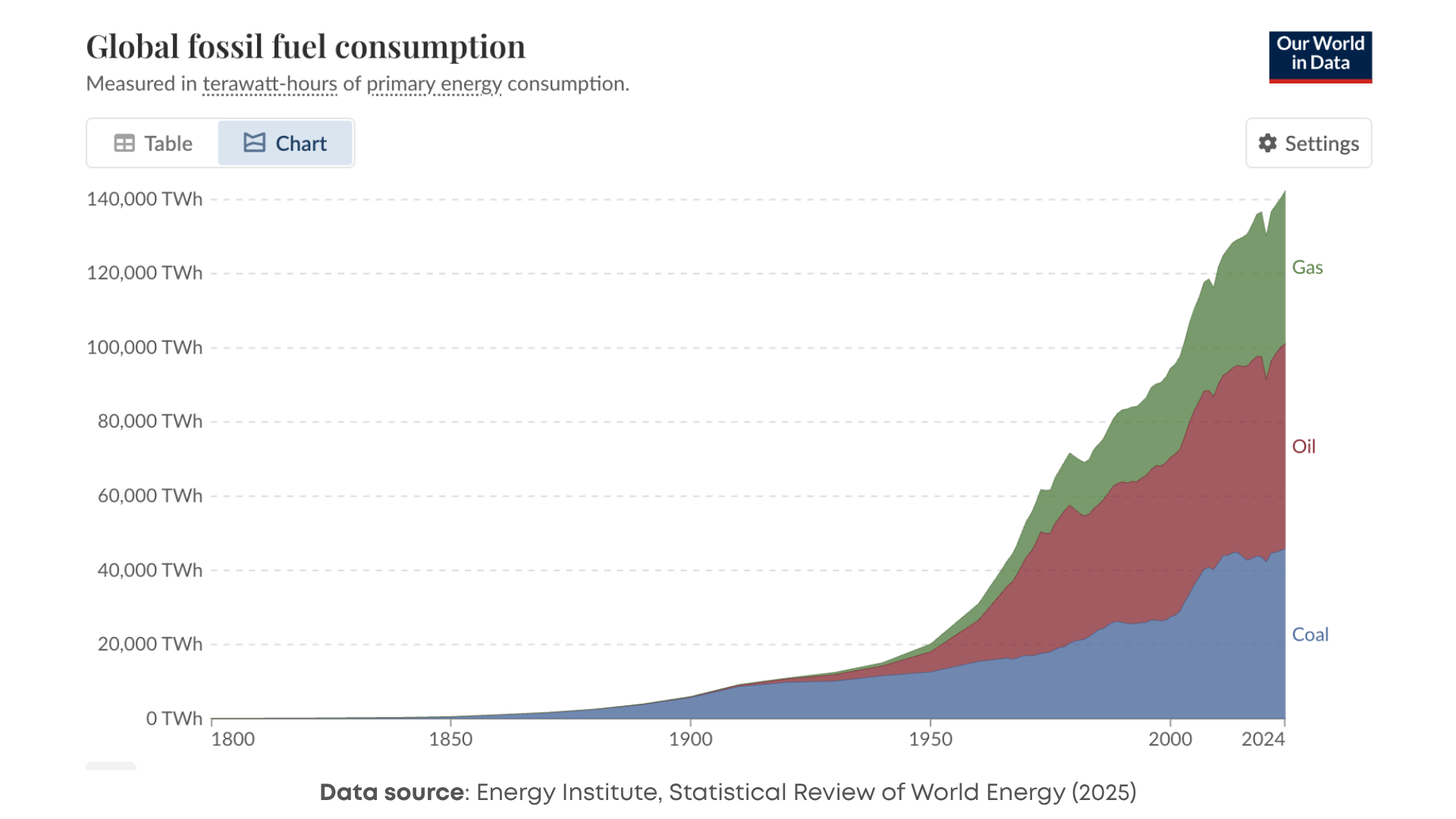
Look around you. You’ll see how embedded fossil fuels are in our lives. From the paint on our walls and synthetic carpet on our floors, fuel in our cars, clothes we wear, gum we’re chewing, food we eat and the device you are looking at this content on - almost everything is made from and/or produced using oil. If you want to find out more about oil and its role in society and the economy, check out Nate Hagen’s videos (Frankly episodes 135-137).
Our species is like every other species. Our behaviour is shaped by biology and physics. We have a fundamental drive to capture and use energy to survive. In the last two centuries, we’ve had easy access to an incredible volume of available energy in the form of oil. Essentially, we hit the energy jackpot. We’ve been drawing down on that energy at an increasing rate ever since.
It’s estimated that it would take humans 4.5 years of continuous labor to match the energy of one barrel of oil. Just think about the price of a barrel of oil compared to how much it would cost to hire the equivalent in humans to do the same job.
In effect, abundant, cheap oil has acted like a massive workforce, supercharging productivity and economic growth. It has drastically increased our ability to do things. It has powered mass transport, global trade, mechanised agriculture, and industrial production, allowing us to grow food at scale, manufacture goods efficiently, and connect across the world. It has also supported advances in healthcare, clean water, and sanitation, helping people live longer, healthier lives. Cities have expanded, education has become more accessible, and living standards have risen for many. Fossil fuels have enabled a level of material abundance and human development never seen before in history.
But this way of living has been built on a very specific set of conditions, cheap, abundant, and reliable energy.
Currently, our assumptions about the future are based on the idea that these conditions will continue. That energy will remain cheap and available, that the transition to renewables will happen smoothly, and that growth will carry on as it has.
Is that assumption realistic?
We’ve Created a Really Complex, Interconnected System
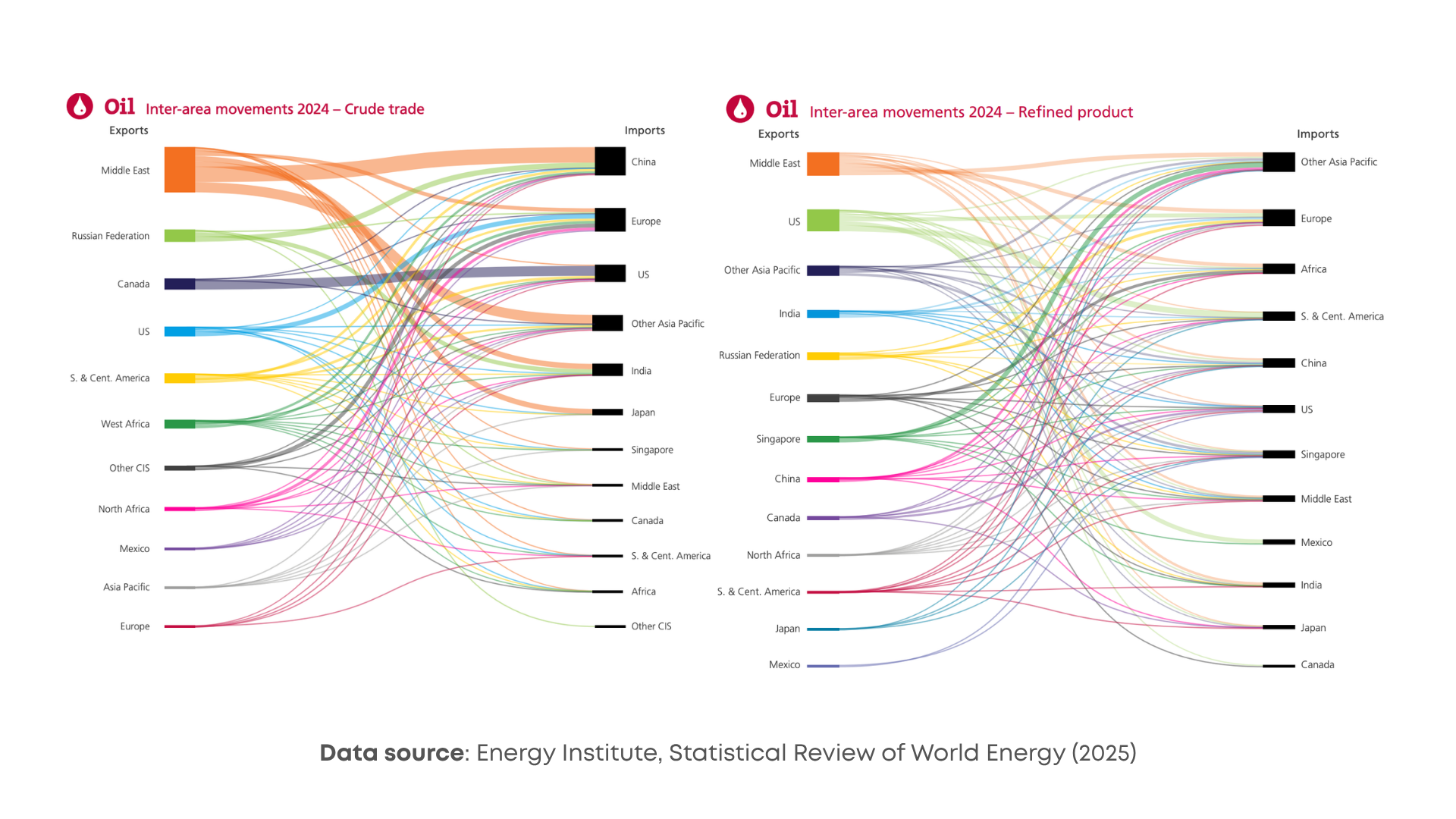
The first thing to understand is that not all oil is equal. Oils coming out of the ground look really different, have different uses and different prices depending on how difficult it is to refine and demand. Oil is classified according to how dense it is, how “sweet” or “sour” it is and where it is located. Light, sweet crude is more expensive because it is easier to refine and cleaner to process.
A bit like cooking, companies use different types of oil to make the product they need. This includes everything from fuel (jet fuel, diesel and petrol), gas, lubricants, bitumen for asphalt, and for the large majority of plastics.
Source: Energy Institute - 74th Edition, 2025 Statistical Review of World Energy
The need for the right mix makes the global oil market highly interconnected. Countries rely on each other to get the right raw ingredients for their particular refinery needs. They mix these together to make the products they need. Like the rest of our economy, it may lead to situations like in the UK where despite being a crude oil producer, the country exports about 80% of its oil to refineries and is obliged to import crude and refined products from other countries to meet its national needs.
This complexity means that disruptions, like the Iran Conflict, heavily impact the system. Refineries are built for efficiency, not flexibility, and struggle to adapt to different crude types, as seen with U.S. refineries struggling to process heavier Venezuelan oil. Being pressured to use different ingredients can clog up the system. Similarly, if access to essential inputs is constrained, it can create bottlenecks that disrupt the entire system.
When you no longer have the right ingredients, the recipe falls apart. Fuel works the same way. It’s not just about availability, but having the right type to exact specifications. Even small differences can make it unusable, requiring reprocessing or blending. Like a precise recipe, the global oil system is tightly calibrated and highly interdependent.
Complex systems work brilliantly until they don’t. When they fail, they fail fast and wide. This is what we are seeing playing out. But to fully understand the fragility of the system, we need to look beyond the conflict. .
The Energy System was Already Under Pressure
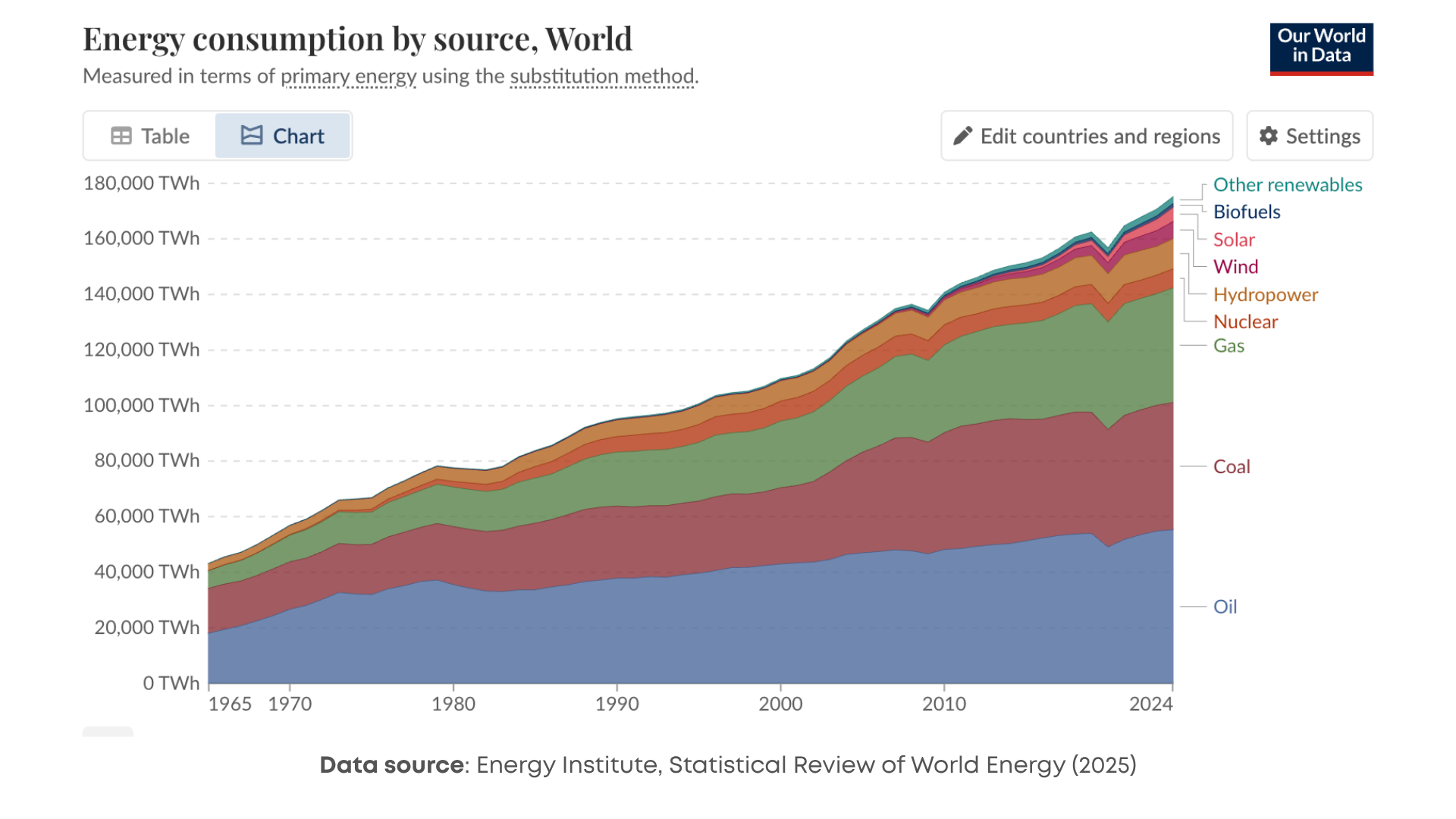
Even before the conflict, the oil industry was under pressure. The biggest challenge is due to cost and difficulty in extraction.When we first started to get oil, it was super simple. It would be a matter of taking a bucket and collecting it out of places like Taranaki where it seeped out of the ground. The easiest and most productive reserves were developed first. Initial abundance created a positive (as in accelerating) systems feedback loop. In systems language, this is not a good or bad thing. Just a faster thing. The more oil we had, the more we could extract, the more we (along with all those machines we invented) could work, the more energy we needed to fuel the system, the more we extracted etc.
With access to abundant energy, we have continuously sought to use it more efficiently. Logically, you would think this would mean we would use less. However, as described by Jevons Paradox, efficiency often leads to greater overall consumption, not less. Another positive loop. We just do more things, more efficiently. This means that despite the accelerating build out of renewables, the world is still consuming more fossil fuels in absolute terms each year. We are in a period of energy addition not transition.
We’re demanding more but we have access to less easy to extract oil as it is getting harder to find it. Many of the mature easy to tap oil regions, such as the North Sea, are now in decline. A growing share of global supply comes from more challenging sources such as deepwater fields, tight oil (shale), and oil sands. These resources are typically more energy intensive, costly, and technically challenging to develop. Added to that, shale and oil sands most often need blending or upgrading with other crude to produce usable fuels.
The system is becoming more complex, more expensive, and why it is more fragile.
So What Does this Mean for the Cost and Availability of Oil?
Oil is going to get more expensive and harder to get. According to the International Energy Agency, the era of easily accessible, high-quality, low-cost oil is largely behind us. Significant ongoing investment is needed simply to offset natural decline rates in existing fields, which typically fall by 4–6% per year. The U.S. Energy Information Administration notes that global oil production is expected to continue. However, there will be rising marginal costs as producers move to harder-to-access reserves. Those charges will ripple through to the pump.
When looked at over time, the energy return on investment (EROI) has been falling. Early conventional oil fields delivered returns of 50:1 or higher, while many modern unconventional fossil fuel sources operate closer to 10:1 or below, meaning more energy and capital must be reinvested just to sustain production.
This structural shift in the system, evident well before the conflict, points to a future where oil is inherently more costly, more complex to produce, and less able to deliver the surplus energy that has underpinned economic growth. Going back to the feedback loop, we need more and more energy to fuel and maintain the current system.
This has important implications for how we think about the future. In New Zealand, much of our core infrastructure (including transport networks, water systems, and energy assets) was developed during a period of relatively cheap energy, high-quality resources, and favourable sites. Today, costs are rising, remaining resources are often more complex to develop, and new projects tend to be more constrained, placing us in a very different position. What was once cheap and straightforward to build is now more expensive, more complex, and harder to sustain.
Why is the Middle East so Important?
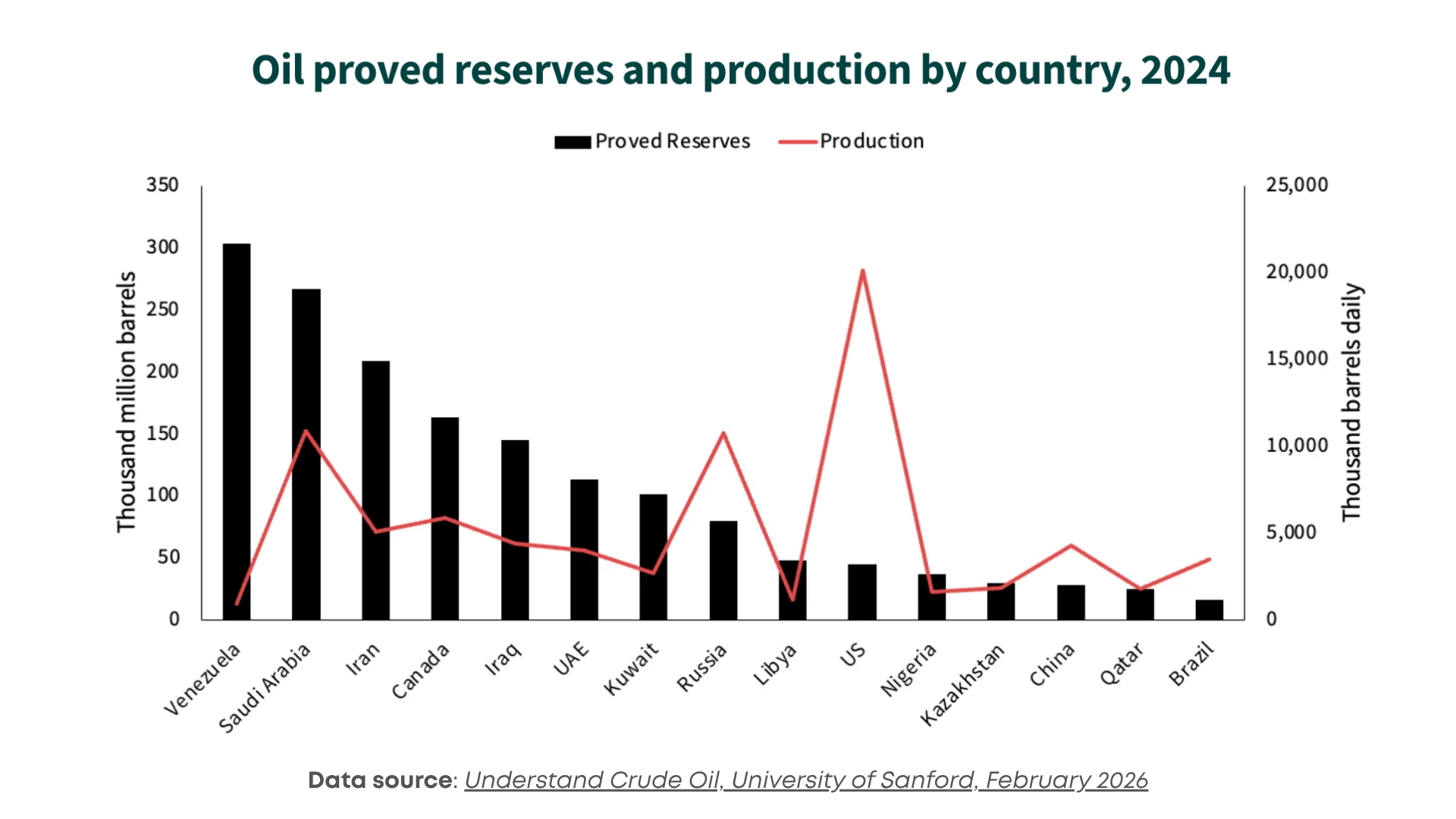
In four words: scale, price, concentration, and potential.
Oil fields are highly concentrated in just a few countries. The top 10–15 countries hold about 90% of global proven oil reserves. Of the easy to reach and extract conventional crude oil, around half is located in the Arabian-Iranian basin, which contains multiple “supergiant” oil fields. This makes the Middle East central to the global energy system because of the scale, concentration, and quality of its oil resources, as well as the relatively cheap extraction costs.
Source: Understand Crude Oil, University of Sanford, February 2026
This also gives the region significant influence over global oil markets, particularly as national oil companies increasingly control production decisions. Supply is not determined purely by geology, but also by political, economic, and strategic considerations. The stark reality of this is playing out currently in the Strait of Hormuz.
It’s also important to understand the role the Middle East plays in the future of global supply. Unlike other legacy oil fields that are declining, the Middle East holds potential for additional discoveries and expanded recovery from existing fields. If we continue to increase our demand for oil without shifting how we do things the world will be increasingly reliant on this region.
So Do We Just Electrify Everything to Increase Our Energy Resilience?
Here is where we need to make the distinction between liquid usable energy like diesel, petrol, jet fuel and electricity. The Ministry of Business, Innovation and Employment (MBIE) reports that 85.5% of electricity generation was from renewable sources in 2024, yet only 45.5% of total primary energy supply came from renewable sources.
The hardest challenge is finding scalable alternatives for diesel and jet fuel, which still underpin heavy transport, aviation, freight, construction, agriculture, and mining. There is no single replacement that can match oil across all these uses. While options like electrification, biofuels, and hydrogen are emerging, each comes with trade-offs in cost, scale, materials, and practicality. I’ve put a list of alternatives in the appendix at the end of this article with links to find out more about what options are available.
This means the future is unlikely to be a simple swap from fossil fuels to renewables. Instead, it will be a mix of energy sources, used more selectively and efficiently, alongside a reduction in overall demand. Systems will need to become simpler, more local, and less reliant on continuous high energy input.
In short, we are not replacing oil, we are adapting to a world with less of it.
So What About Renewable Energy Sources?
While renewable energy sources (hydro, sun, wind, tides etc.) are readably available, converting these into usable energy is another challenge. The equipment and infrastructure needed for renewables is intrinsically linked to fossil fuels. It is currently not possible to power the diggers that extract the raw ingredients, refine the metals, and transport the materials and products needed for the renewable energy transition all over the globe without fossil fuel. Paradoxically, the more we surge towards electrification, the more fuel we burn.
The transition to renewables is fundamentally a material challenge as much as an energy one. Solar panels, wind turbines, EVs etc. all depend on a relatively small set of critical materials such as copper, steel, aluminium, cement, and petrochemicals, all of which are under increasing supply and cost pressures.
Scale and time is also a challenge. Fully replacing the current fossil fuel system with renewable technologies at a global scale is extremely challenging within existing timeframes and resource constraints. There are increasing concerns about whether we have access to the materials necessary for an energy transition let alone the AI revolution, industries that are in direct competition for many of the same resources.
Strategically, we should be trying first to reduce demand. That means treating energy like gold, wasting none of it and becoming super efficient. Secondly, we should electrify as much as we can as quickly as we can. This means we have more resources in the country to recycle for the next generation.
It’s Not Just About Rolling it Out Once.
We need to make sure that there is enough energy and materials not just to allow our generation to live, but also for our kids, our grandkids, and those who come after them.
This includes materials and energy for all the machines we use to drive, fly, make, dig, etc as well as the infrastructure needed to generate electricity.
Energy infrastructure in New Zealand is long-lived but not permanent, with each technology requiring ongoing maintenance and renewal. Large hydro schemes can last 80 to 100 years or more, though key components need replacing every 30 to 50 years, while geothermal plants typically last 30 to 50 years with careful management of the resource. Wind turbines and solar panels have shorter lifespans of around 20 to 30 years, with some components like inverters needing replacement even sooner. Across all systems, supporting infrastructure such as transmission lines and control systems also require regular upkeep, highlighting that energy systems are not one-off builds but continuous cycles of maintenance and replacement.
The machines that power our modern world also have finite lifespans. Vehicles, aircraft, farm machinery, and industrial equipment typically last anywhere from 10 to 30 years, depending on use and maintenance, and require ongoing repair, parts, and eventual replacement.
Like energy infrastructure, they are not one-off investments but continuous demands on energy, materials, and technical capability over time.
We need to make sure that we keep our kids and grandkids in mind when we think of how fast we’re drawing down on that big liquid battery of ancient sunlight we’re rapidly drawing out of the ground, putting into barrels and sending around the globe.
As a small country at the bottom of the Pacific, we are heavily reliant on imported fossil fuels. We no longer produce or refine fuel domestically, which means our current system leaves us highly exposed to global markets and geopolitical shifts.
As nations focus more on securing their own energy and resources, competition for supply is likely to increase, along with price volatility. This exposes us not just to higher costs, but also to potential disruptions in availability, reinforcing the need to reduce dependence and build more resilient, local energy systems over time.
While Aotearoa New Zealand starts from a relatively strong position, with most of its electricity coming from renewable sources, the broader system still depends heavily on fossil fuels. The infrastructure required to build and maintain renewable energy is closely tied to fossil fuel supply chains, and transport, industry, and much of the wider economy remain reliant on oil, gas, and coal.
These pressures are not felt equally. Rising energy costs tend to hit lower-income households, small businesses, and rural communities first, particularly those with limited transport options or higher exposure to fuel costs. At the same time, periods of disruption can benefit certain parts of the system, including energy producers, commodity traders, and defence-related industries, where profits tend to rise during times of scarcity and conflict . If left unmanaged, this dynamic risks widening existing inequities, making it even more important to focus on fair, community-led solutions that build resilience for everyone.
Economic Headwinds
Our transport is highly exposed to fuel shocks. Transport accounts for almost three quarters of all oil product consumption. Our food sector is also at risk. These underpin two of our largest industries, tourism and food exports. When disruptions like the Iran Conflict occur, higher oil prices and supply disruptions immediately flow quickly through the economy.
This is likely to increase inflation and add pressure to businesses and households already dealing with the cost of living. We’re heading into a period of economic headwinds where volatility becomes the norm rather than the exception. These pressures are building on an already constrained system. Geopolitical conflict adds further strain, making it more fragile and more exposed to disruption.
Flow on Impact for Communities
At a community level, these pressures will be felt in very real ways. Higher fuel costs flow through to everything, from groceries and transport to housing and local services. Volatility makes it harder for households to plan and for small businesses to stay afloat.
Communities that are more exposed to transport costs or reliant on tourism and seasonal income are likely to feel this first and most acutely. At the same time, disruptions to supply chains can impact the availability of goods, creating uncertainty and stress.
This reinforces the importance of strengthening local resilience, supporting each other, and building systems that are less dependent on long, fragile supply chains.
We have been confronted with a huge challenge that we could seize as an opportunity. It leaves us open to imagine, what does a world beyond fossil fuels look like?
Maybe it’s time to talk about a long term, intergenerational energy strategy
Maybe it’s time to start thinking about this as a systems challenge, and what a long-term, intergenerational energy strategy could look like.
We are seeing a system under increasing pressure. As parts of it begin to strain or fail, they also adapt and reorganise. It’s in these periods of disruption and renewal that there is real potential to reshape how things work.
What if we started to seriously imagine a future beyond fossil fuels? With or without the Iran conflict, this is something we need to face head on. It will take a collaborative effort at every level, and a long-term, intergenerational strategy to reshape how our energy systems work.
At its core, this is about how we value energy. We need to start thinking of oil more like gold, a finite, high-value resource. The world we grew up in was built on cheap, abundant energy, but that foundation is changing. The challenge now is not just to replace fossil fuels, but to use less, waste less, and build systems that are designed to last, be maintained, and rebuilt over time. We also need to be mindful of Jevons Paradox, ensuring that efficiency gains or new energy sources don’t simply lead to increased overall consumption.
We need to invest in science, innovation, and the people who can help solve these challenges. Our engineers, researchers, and businesses thrive on problems like this. Their world is about building within material and energy limits. Investing in our “grey matter” now is one of the best ways to set future generations up to succeed.
At the same time, we need to think carefully about the infrastructure we build today. It’s likely to become more expensive over time as energy and material costs rise. There is a strong case for getting ahead of it now. What are the big projects we need for the future, better public transport, stronger regional connections, more resilient energy systems? Imagine options like high speed rail connecting our regions. The decisions we make now will shape how well future generations are able to live, move, and thrive.
In an election year, this also means raising our expectations of leadership. It’s worth asking what is best for the long-term future of New Zealand, its land, its people, and its economy. This will require action from communities through to the Beehive, and a willingness to work across party lines. It’s probably a good moment to start thinking about what democracy 2.0 looks like with a more collaborative mindset to solve some of these gnarly intergenerational challenges.
This is not just a climate issue, it is a broader systems issue. Climate is one outcome of how we have drawn down that vast “ancient solar battery” of fossil fuels as if it were limitless. At its heart, this is about building long-term resilience and prosperity for our country, a vision we can all get behind.
WHAT YOU CAN DO?
Individuals
As an individual, first and foremost see how you can reduce your energy use. Over one week, how much fuel do you use? Are all of these trips necessary? Could you replace these with walking/biking/public transport? Offer to carshare if relevant especially if you have an EV (fill cars with people). If you can, look to get an EV.
Start to get yourself away from any dependence on fossil fuels in the home and improve your energy efficiency at home (insulation, double glazing etc.) Make the switch to fully electric (rewiring Aotearoa has some great tools you can use) and avoid exposure to price hikes to gas and diesel for heating and cooking.
Build resilience, have a plan, strengthen local connections, and think ahead about how to reduce dependence on systems that may become more expensive or less reliable over time. Check out WiseResponse list of initiatives.
Communities
At a community level, the opportunity is to work together to build local resilience. Get involved with local groups like the Community Resilience Groups in the Queenstown Lakes District. Support local food groups like the Southern Lakes Kai Collective, get involved in food security groups, set up or get involved in sharing systems like the Wanaka Community Workshop, tool libraries or ride-sharing (check out Carpoolin App), and develop local energy solutions where possible.
If you are rural, start to look at how you can set up a collective to make alternative crop based biodiesel.
If you see anyone struggling, offer help. Connect them into the right agencies in your community that could provide support (e.g organisations like Community Link Upper Clutha that offer foodbanks, winter fuel, financial aid, mental health/wellbeing support).
Stronger community networks can help reduce reliance on distant supply chains and provide support when disruptions occur, making communities more adaptable and self-reliant.
Businesses
Reduce fuel exposure: Use less energy where you can and start moving away from fossil fuels. Electrify what makes sense, whether that’s switching your fleet to EVs or installing solar. Explore alternative fuels and practical options for your business, and look for simple wins like carpooling or reducing travel.
Build buffers: Build financial buffers and maintain flexibility. In a volatile environment, avoid locking into fixed contracts too early.
Reduce exposure to hard to get / costly materials: Improve efficiency and reduce waste while preparing for a more constrained and uncertain future. Look for ways to design products and services that use fewer materials. Investing in durability, repair, and reuse, building more resilient supply chains, and developing local capability to maintain and refurbish assets will all help reduce reliance on new production and strengthen your position over time.
Look after your people: Periods of uncertainty can be stressful, so make sure you’re checking in with your team, supporting wellbeing, and creating space for honest conversations. A resilient business starts with people who feel supported and able to adapt.
YOU MADE IT - I HOPE YOUR CUPPA IS NOT COLD!
The challenges are real, but so is our power to act. Every choice, from supporting local food, using energy wisely, or speaking up for fairer policies, helps build a stronger, more resilient system. Small steps today add up to a future where everyone has access to healthy, reliable food, heating and transport options. Together, we can turn uncertainty into opportunity and shape systems that work for people and the planet.