Powering a More Resilient Future.
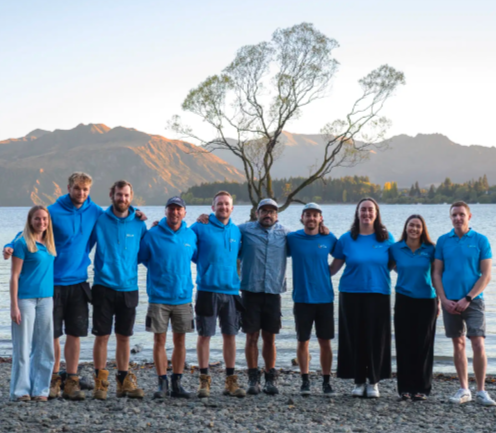
Think Solar began with a simple belief: renewable energy would become an increasingly important part of our future, and local communities needed trusted people to help make that transition possible.
Today, their focus goes beyond installing solar and batteries. It is about lowering energy costs, cutting emissions, building skills within their team and creating positive experiences that encourage greater uptake of renewable energy.
In this Business with Purpose conversation, Tess Lewis from Think Solar shares the vision for an increasingly electrified Aotearoa and why long-term thinking matters.
Every business has a story behind it. What sits at the heart of yours?
10 years ago, we knew that renewable energy would make up a huge part of energy generation in the future, but looking around, there wasn’t much solar on rooftops. So we saw an opportunity to provide that for our local community. Then came a big learning curve, taking what we knew about electrical systems and learning how to give a great experience providing solar to local people.
What does being a business with purpose mean to you in practice?
It's a bit of a blessing. We get to operate a business that contributes to a good outcome for both the community and the environment. Along with our product (solar and batteries) lowering energy costs for people and cutting carbon emissions, our purpose is to give exceptional experiences for people who install solar. We believe positive experiences will spread the word of renewables, whereas negative ones could reduce the uptake. It makes coming to work easy knowing we are making people’s lives easier and having a positive impact on the planet.
How does that purpose influence the decisions you make, the people you work with and the impact you want to have?
We always hold to our values: giving customers exceptional experiences, empowering each other and bettering our environment. Working with people who align with our values and making values-based decisions gives us the confidence that we are moving in the right direction and will give our customers the best possible experience with solar.
What are some of the biggest changes or challenges you see shaping your industry and where do you see the greatest opportunity to do things differently?
Solar and battery uptake is rising at an exponential rate. In NZ we don’t have anywhere near the amount of skilled or experienced people required. We face the challenge of an inexperienced workforce countrywide, which in turn could leave people with low-quality solar installations. The opportunity for us is that, as we have all in-house staff, we can use our internal training systems to ensure we continue to do quality work as we grow.
Where do you believe business has a role to play beyond its own four walls?
We believe businesses should be active members in their community, helping to build a stronger future for our local area; supporting initiatives like Wao is a great place to start!
As a local solar company, we see a real opportunity to support the transition to electrification in our community, particularly at a time when our local network is under increasing pressure and households are facing high power prices. Our role is not just about installing solar systems, but helping customers find practical ways to take control of their energy costs while contributing to a more resilient and sustainable future.
What responsibility or opportunity do businesses have to contribute to stronger communities and a thriving future?
Businesses can demonstrate sustainability. Not only in an environmental context. They can showcase how you can invest in people, infrastructure and better environmental practices, thinking about the long term. Training people and providing great careers makes the community stronger a whole.
Collaboration is one of Wao’s core values. Where have you seen collaboration create an outcome that wouldn’t have been possible alone?
We have a collaboration with an energy retailer, ecotricity to provide a unique pricing plan for our customers which achieves better outcomes on their bills. Ecotricity is 100% carbon neutral so it not only achieves a great outcome for our customers but has a greater impact on the country and planet as a whole.
Why have you teamed up with Wao for Summit 2026? What is it about Wao’s work, our community or what we’re trying to achieve that made you want to stand alongside us as a partner?
Wao has been a long standing sustainability movement in the community. We like what it stands for and the initiatives it drives. We believe in a low emission, electric future and we see the work Wao does as vital to leading our community towards this future.
Partnerships like yours enable Wao to turn ideas into action. What do you hope your business helps make possible — for our community or more broadly?
There are many sectors of sustainability. We hope to be able to contribute in the energy context. Using our knowledge to help Wao with energy initiatives and educating the community on anything energy related.
Looking ahead, what gives you hope — and what change would you most like to see businesses helping to lead over the next decade?
What gives us hope is seeing more people and businesses taking action towards a cleaner, more sustainable future. We’d like to see more businesses embrace renewable energy and play their part in the move towards electrification. For us, it means continuing to help our customers reduce their power costs, make smarter energy choices and continue doing our part to become even more sustainable.
Fast-forward 100 years to 2126. What does a thriving Aotearoa look like to you and what do you hope we have done differently to get there?
It may be biased, but we see an electric future. Fossil fuels are a thing of the past, energy for transport and the home is electrified. The energy is produced by 100% renewable sources and there is an abundance of it at a low cost.
The thing we have done differently to get there is not incentivising electrification, but taking the incentives away from the incumbent energy sources (Fossil fuels) - renewables can already stand on their own as the right path forward for energy.
If the decisions we make in business today help shape the world of 2126, what do you think we need to be brave enough to change now?
It's a hard one because business is a hard game. Generally, people are trying to do the right thing, but time and cost constraints are working against them. In saying that, businesses should be brave enough to make some long term decisions to drive sustainability. Changing from gas to electric for process heat, electrifying their fleet etc. There are low-interest loans available for things of this nature, so the business case for these moves is already strong. Businesses need confidence in the long-term vision to make these brave calls.
What do you hope your organisation’s legacy will be 100 years from now?
That we have set the standard of giving solar and battery customers the best possible experience. Then they have told their friends how great solar and batteries are, which in turn has increased the uptake in NZ moving us to a more resilient, more sustainable future.