
Built to Last.
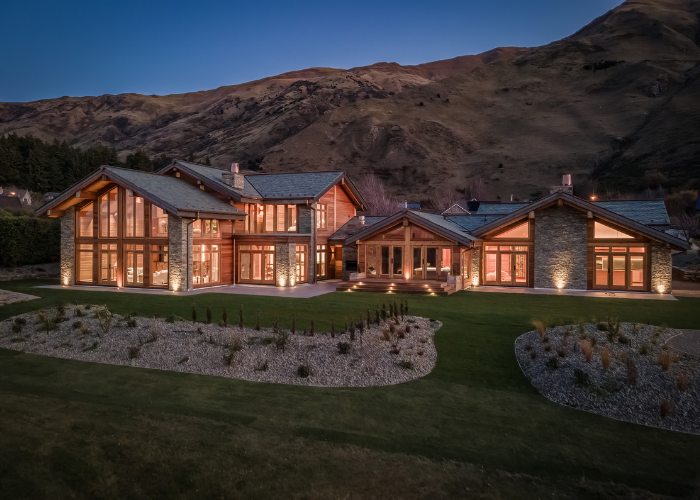
What if we stopped building for the short term? We talk with Filippo Scaramella of Marble & More about craftsmanship, durability and why the materials and systems we choose today should serve generations to come.
For Marble & More, purpose is rooted in generations of craftsmanship and a belief that good buildings should endure. Drawing on a family history of quarrying, roofing and specialist construction in Europe, the business combines traditional knowledge with modern engineering to create buildings that prioritise longevity, performance and occupant wellbeing. In this Business with Purpose interview, they challenge the prevalence of short-life building materials and explore why investing in quality, durability and better design can benefit homeowners, communities and the environment for decades to come.
Every business has a story behind it. What sits at the heart of yours?
At the heart of my business is a family tradition that began in the early 1900s. My great-grandfather was a quarryman, and so was my grandfather. They worked in underground mines extracting serpentine schist, a material used for centuries to cover the roofs of churches and historic buildings across the Alps. This stone is prized because it is handcrafted and lasts for centuries, thanks to its exceptional physical and mechanical properties. Combined with its natural green colour and distinctive pattern, it blends perfectly with the alpine landscape.
My father held a share in a cooperative quarry, which I later transformed into a company installing high-quality roof systems throughout Europe. I have always managed the teams, while also working on site myself to install premium roofing materials: copper, stainless steel, stone, selected terracotta tiles, wooden shingles, and slate. Premium flashings and guttering were also part of the service.
Building on this, I engineered a cold-ventilated roof system to regulate indoor humidity and vapour transfer, improve comfort, acoustics, and energy performance, manage moisture and reduce condensation and mould risk. So, I had the opportunity to work with one of Europe's leading prefabricated wooden house companies, which gave me valuable experience in that field.
In 2016, I moved to New Zealand for family reasons and started my own company, offering well-designed roofs and more recently, I have begun importing and installing prefabricated wooden houses.
In the end, mine is a story of craftsmanship and passion.
What does being a business with purpose mean to you in practice?
It means knowing what you are doing, doing it with passion and ethics, and never stopping the pursuit of improvement. The building industry is complex and deeply connected to people's lives. In my view, a business purpose must also be a philosophy of life - a way of seeing the world that we are called to contribute to.
How does that purpose influence the decisions you make, the people you work with and the impact you want to have?
We share a common vision with our people. We believe in what we do, and we bring both skill and passion to it - that is the engine of the company. We are a small team with a full roofing skills where everyone is also specialised in specific task. Especially work with copper or stone pretend a kind of knowledge and experience that can be achieve only after a life of work, this is something common in the work culture were we come from where people spent the entire life doing and improving specific tasks.
What are some of the biggest changes or challenges you see shaping your industry and where do you see the greatest opportunity to do things differently?
Unfortunately, what I see now is the massive use of poor-quality materials with a short lifespan that require constant maintenance.. The manufacture of these materials harms the environment, and they become waste that ,in a short time, future generations will have to dispose of. But more than that, they affect people's lives. The greatest opportunity lies in returning to materials and systems that are built to last, combining traditional craftsmanship with modern engineering, so the building can protect the health of its occupants and the future of our environment.
Where do you believe business has a role to play beyond its own four walls?
In my personal experience, business is a powerful vehicle for sharing values and educating people on critical matters like durability and sustainability. Our roofing and prefabricated housing systems directly address the major challenges currently facing the global construction industry. These lifetime systems significantly reduce landfill waste and carbon footprints. As extreme weather events intensify, a proper structural approach ensures that a home remains a safe sanctuary for generations. Furthermore, our systems eliminate "Sick Building Syndrome" by preventing mould and dampness, ensuring clean, dry air for the inhabitants. This balanced approach stabilises indoor temperatures year-round, cutting heating and cooling expenses by up to 30% while reducing carbon emissions.
What responsibility or opportunity do businesses have to contribute to stronger communities and a thriving future?
Using environmentally friendly materials helps preserve the heart of our surroundings, while a high-performance structure eliminates the endless cycle of costly repairs and replacements, significantly boosting property value. Economically speaking, we are facing a massive crisis in the housing market. Most buildings today are incredibly expensive, yet they are constructed with poor-quality materials and often a lack of expertise. The bill is ultimately paid by the buyer, who is often forced to take on a lifetime mortgage and face constant maintenance costs for a poor building. In the long run, both the buyer and the environment lose. We need to change this equation. A well-built building is not just a house; it is a far better investment for the entire country's economy.
Collaboration is one of Wao’s core values. Where have you seen collaboration create an outcome that wouldn’t have been possible alone?
Collaboration is the smartest way to drive business development. Pooling our energy and sharing our expertise elevates the quality of everything we offer. In Wao, I have finally found an aligned partner to engage with a counterpart who shares our vision to achieve these goals and contribute to building a network that can spark real, systemic change
Why have you teamed up with Wao for Summit 2026? What is it about Wao’s work, our community or what we’re trying to achieve that made you want to stand alongside us as a partner?
We have teamed up with Wao for Summit 2026 because we share the same philosophy and deeply believe in your mission. We want to actively contribute to the positive change and sustainable development that this community is driving.
Partnerships like yours enable Wao to turn ideas into action. What do you hope your business helps make possible — for our community or more broadly?
We want to openly share our knowledge and ideas. My hope is that our insights will actively support Wao in achieving its purpose that we completely share.
Looking ahead, what gives you hope — and what change would you most like to see businesses helping to lead over the next decade?
I believe it is vital to educate the public to help them make informed choices. Moving forward, I hope Wao can also become a fruitful interlocutor for the government, guiding lawmakers on these critical issues. As we discussed, positive cooperation between businesses, communities, and legislators is the only way to achieve lasting results that truly benefit both the country and its citizens.
Fast-forward 100 years to 2126. What does a thriving Aotearoa look like to you and what do you hope we have done differently to get there?
I believe Aotearoa should look at the experiences of older countries with thousands of years of history - learning from their successes and actively rejecting their mistakes. Fortunately, we are a young nation with plenty of room to move and shape a truly original identity. I imagine a country that pursues a completely different path of development compared to the rest of the world. I picture a genuinely green nation where people and governments make far-sighted choices rather than chasing short-term, artificial profits. Preserving the environment and safeguarding society are indispensable elements to guarantee a future for the next generations.
If the decisions we make in business today help shape the world of 2126, what do you think we need to be brave enough to change now?
We must completely rethink our current model of development, which today seems purely driven by financial metrics. In the long run, as we are already seeing in many Western societies, this approach leads to a decline in the quality of life and the irreversible destruction of the environment. These models must be revised as soon as possible. Aotearoa is perhaps one of the few countries left that still has the privilege to make this shift proactively, without facing catastrophic disruptions.
What do you hope your organisation’s legacy will be 100 years from now?
I hope my passion and my beliefs will serve as a seed that takes root, growing to help future generations achieve a better, more sustainable future.