From Adaptation to Transformation.
Is incremental change enough? Professor Sara Walton explores what it takes for businesses to move beyond adapting around the edges and begin helping shift the systems they are part of.
Professor Sara Walton has spent more than 20 years researching business, climate and sustainability, with a particular focus on what triggers genuine transformation. Her work asks businesses to look beyond their own operations and understand themselves as part of wider systems encompassing communities, ecosystems, regulation and the economy. In this conversation, Sara explores resilience, tipping points, long-term thinking and why the greatest opportunities may lie not in making existing systems incrementally better, but in identifying the leverage points capable of changing them altogether.
What first drew you to this field, and what sits at the heart of your work?
I came to this through the NGO and community sector, watching organisations either take responsibility for their impact or not. I've been researching in this field for over 20 years now, and what sits at the heart of my work now is a question about transition: not whether businesses say the right things about climate and sustainability, but what actually triggers a business to move from incremental adaptation to genuine transformation and where the leverage points sit within the wider system for making that shift happen. That question, understanding a business as part of a system rather than a single entity and finding where a push can shift the whole system rather than just its edges, is what most of my current research tries to explain.
What does "business with purpose" mean to you today?
For me it's not a term I use much. Every business has a purpose within a changing system, whether or not it's ever articulated one and understanding that purpose starts with understanding where you sit within that system and within the transition it's undergoing. A business with purpose can show its work: it can point to what it has changed, not just what it has committed to and increasingly that has to mean change in the system it's part of, not only change within its own operations. Too many businesses treat sustainability as something to be absorbed incrementally within their own four walls, a bit greener each year, without ever asking what needs to shift beyond them. Purpose, to me, is a business that understands its place in the system, recognises its own threshold and chooses to act on that understanding deliberately, using its position to help bring about change in the wider system rather than settling for change in the organisation alone.
How have your views changed, and what are businesses still getting wrong?
I used to think better frameworks and information would be enough to shift behaviour gradually, that if businesses understood the risks and the frameworks clearly, good action would follow. I no longer believe that.
What businesses still get wrong is that they're operating with short-term goals that hinder any real transitional understanding. Quarterly and annual planning cycles simply aren't built to register slow-building thresholds, so risks that are building for years get treated as someone else's problem until they suddenly aren't. The second thing is that businesses still see themselves as single, self-contained entities rather than as part of a wider system. They'll optimise their own operations, their own supply chain, their own disclosure, without recognising that their resilience is bound up with the resilience of the communities, ecosystems and regulatory environment they sit inside. A business can look like it's doing everything right by its own short-term, self-contained measures and still be completely unprepared for a threshold that arrives from outside its own four walls.
What are the biggest challenges shaping business in Aotearoa right now, and the greatest opportunity?
I'd frame the biggest challenge as resilience and it comes at businesses from two directions at once. There's the physical side: storms, floods and other weather events already disrupting operations and supply chains, not as future risk but as current cost. And there's the transition side: businesses whose thinking hasn't moved, who are still managing climate as a compliance issue rather than a strategic one and who are starting to carry real reputational damage for being visibly left behind. Businesses that see resilience as covering both fronts, hardening their physical operations while genuinely updating how they think, have the greatest opportunity. The ones treating it as only one or the other are the ones most likely to be caught out.
Where does business have a role beyond its own four walls?
This follows directly from where I think businesses still get it wrong: seeing themselves as single, self-contained entities rather than part of a wider system. Tipping points don't respect organisational boundaries. A business's own threshold moment is usually triggered by and in turn triggers, changes in regulation, community expectation and ecological limits well outside its own walls. So business has a role in understanding itself as one actor within that wider system, not a bounded unit optimising its own operations in isolation and in recognising that planetary boundaries and social tipping points are the real constraints it operates within, whether or not its short-term planning cycles acknowledge that.
What responsibility and opportunity do businesses have toward communities, ecosystems and a thriving future?
The responsibility is to stop treating community and ecological wellbeing as externalities that only matter once a threshold has been crossed and the costs are unavoidable and to stop planning on timeframes too short to notice a threshold building in the first place. The opportunity is in acting before that threshold arrives: treating early warning signs, whether from climate science or from communities, as genuine inputs into decision-making rather than risks to be managed after the fact. Plus, recognising that a thriving community and a resilient ecosystem are part of the same system a business depends on, not separate concerns to be weighed against its own interests.
Where has collaboration between business, communities, government and academia created outcomes that wouldn't have happened alone?
There are some striking examples of this at a global scale. To get the shipping industry moving toward zero-emission fuel, it took shipping companies, ports, fuel suppliers, financiers and governments all committing at the same time, because a green shipping corridor doesn't work if any one of those pieces is missing. In the UK, researchers have gone even further and embedded themselves directly inside government departments across several countries to build shared tools for modelling low-carbon transitions, something no single university or civil service could have built alone. And in the Amazon, the evidence is just as telling in reverse: efforts to protect the forest consistently perform better wherever Indigenous communities are genuinely part of the governance. Locally, Wao's work and grassroots initiatives around the motu are showing that same combination of business, community and local knowledge produces outcomes that formal policy or research on its own simply can't reach.
Why is it important for universities to be part of conversations like the Wao Summit, and what interested you in partnering for Better Business Day?
Universities have a long-standing role as the critic and conscience of society, but there's a second role that matters just as much here: the ability to take a long-term view that people caught up in the day-to-day pressures of running a business often can't afford to take. Universities are positioned to study tipping points before they arrive, rather than reacting once a business or a sector has already crossed one, precisely because we're not carrying the same short-term commercial pressures.
I'm interested in Better Business Day because it's a chance to bring that longer view into direct contact with businesses who are trying to decide whether they're leading change, signalling it, or standing in the way. Plus, I really enjoy learning from the businesses involved and seeing the ways that their everyday actions are bringing about change.
What do you hope students and emerging leaders take away?
I want them to leave with a genuine understanding of systems: that a business isn't a bounded, self-contained unit but part of a wider system of communities, ecosystems and regulation it depends on. From there, I want them to understand why some systems need replacing rather than incrementally improving and to be able to identify the leverage points where a deliberate push can shift the whole system rather than just adjusting its edges. That's a different skill from managing risk within the system as it currently stands and it's the one I think matters most for leaders who'll be making decisions as more of these thresholds arrive.
What gives you hope, and what change would you most like to see business leading over the next decade?
What gives me hope is that we now have language and increasingly data, for identifying tipping points before they arrive, rather than only naming them in hindsight, and a growing understanding that businesses sit inside systems rather than outside them.
The change I'd most like to see over the next decade is businesses using that futures thinking deliberately. That is, identifying the leverage points where they can help shift the wider system, rather than just protecting their own short-term position within it and treating the coming decade's regulatory, ecological and social thresholds as decisions to get ahead of, rather than disruptions to survive.
Fast-forward to 2126. What does a thriving Aotearoa look like, and what do you hope we've done differently?
A thriving Aotearoa in 2126 is one where we didn't just cross this century's major tipping points, ecological, climate, social, deliberately rather than by force, but used them as the impetus to build a genuinely new system rather than patch up the old one. I hope we've done the harder, earlier work of recognising thresholds while there was still a real choice about how to respond and choosing to build something different rather than waiting until physical and social limits made the decision for us.
What do we need to be brave enough to change now, if today's decisions shape 2126?
We need to be brave enough to name both the positive and negative tipping points we can already see, in physical climate risk, in ecological limits, in social trust and act before we're forced to, rather than defaulting to incremental change because it's more comfortable. That includes being honest that crossing some thresholds will mean real loss for some businesses, not just opportunity for others.
What do you hope your own work will have contributed 100 years from now?
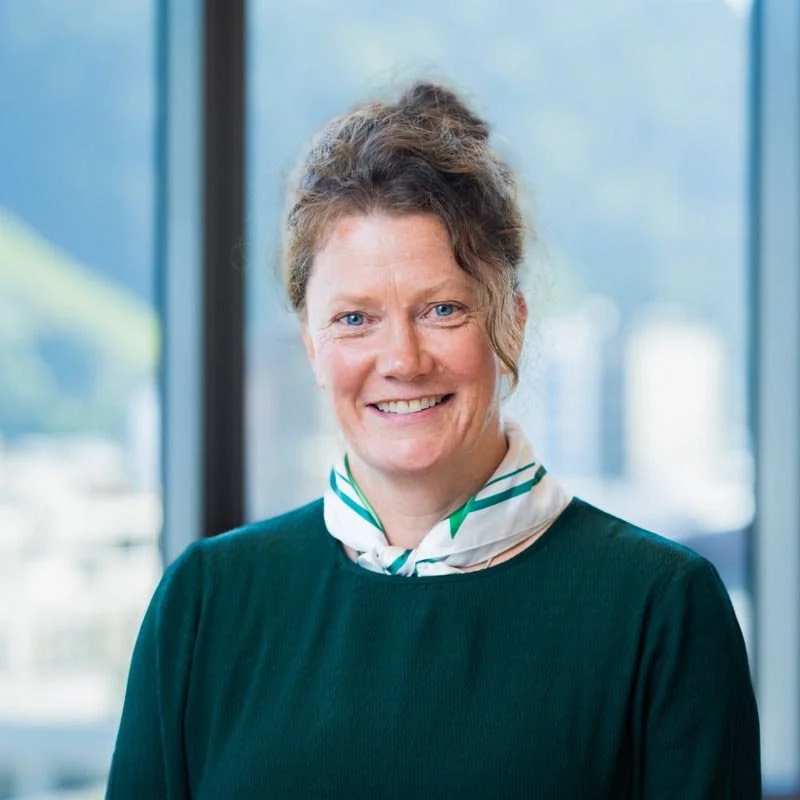
Professor Sara Walton
I really hope that I have helped demystify climate action and the possibility of sustainable transitions through driving understandings of best practice and leverage points for change.