
A Fantastic Evening of Local Food Connections
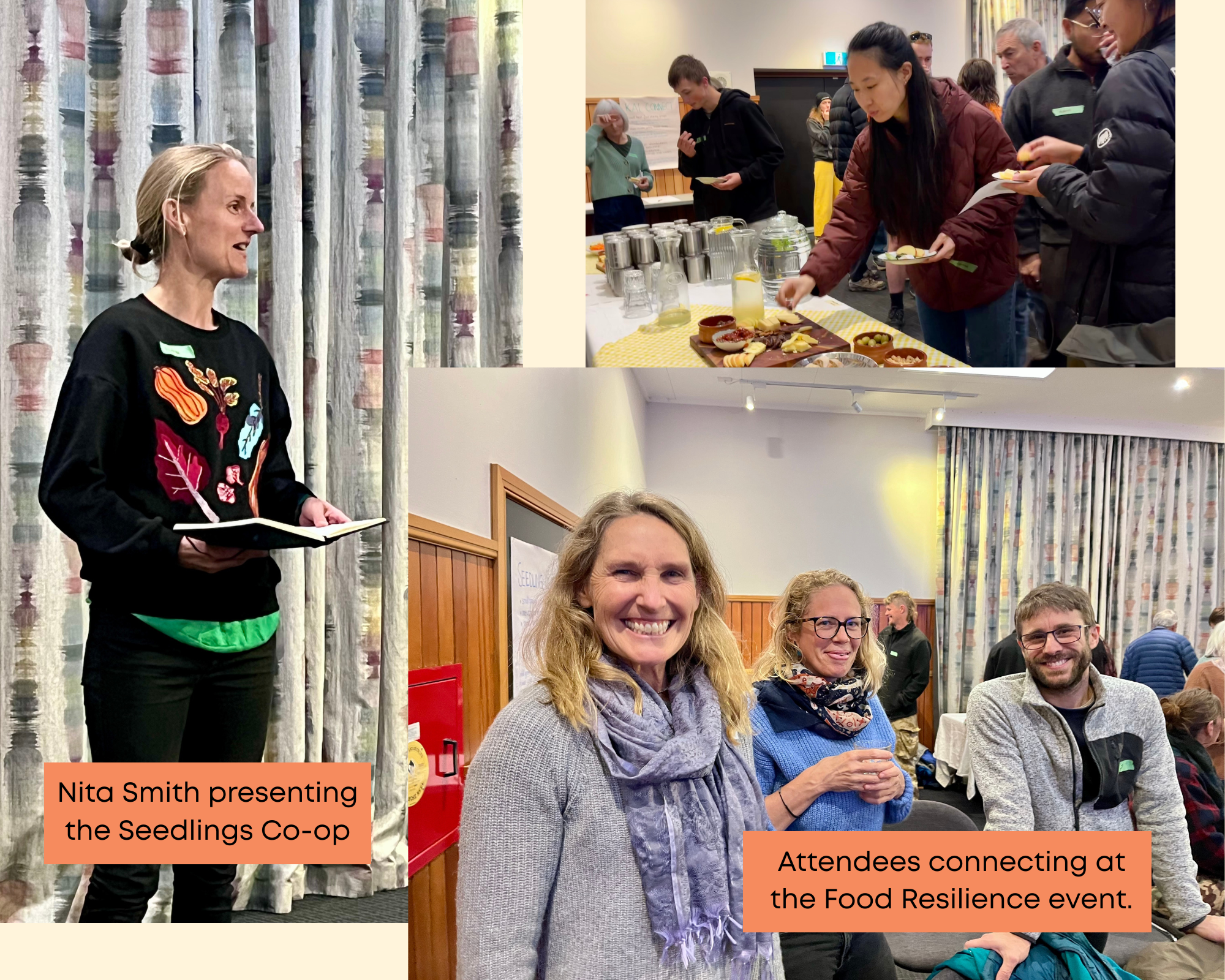
On Wednesday evening, Wao's Green Drinks event brought together a wonderful mix of growers, gardeners, foragers, hunters, fishers, preservers, bakers, and food enthusiasts from across the Upper Clutha.
The event, Growing Local Food Networks, explored a simple but important question:
How can we strengthen local food resilience by connecting the people who already produce food in our community?
The response exceeded our expectations.
The room was filled with enthusiasm, curiosity, practical ideas, and a genuine willingness to share knowledge, resources, and food. Throughout the evening, people spoke about growing vegetables, raising seedlings, preserving seasonal produce, catching fish, hunting wild game, foraging edible plants, baking sourdough, and supporting one another through local connections.
Many attendees told us afterwards how much they had enjoyed the evening, how valuable the conversations were, and how encouraging it was to discover just how much food knowledge and experience already exists within our community.
One thing became very clear: there is strong interest in building local food networks that are practical, community led, and based on relationships.
Why Food Resilience Matters
Most of the food consumed in our region arrives via long supply chains and road transport networks. While these systems generally work well, they can be disrupted by extreme weather, road closures, fuel shortages, earthquakes, or other unexpected events.
Food resilience is our community's ability to continue accessing nourishing food when disruptions occur.
One of the most effective ways to strengthen resilience is by supporting local food production and creating stronger connections between people who already, or who would like to, grow, gather, hunt, fish, forage, preserve, bake, and cook food.
The three concepts explored during the evening all aim to do exactly that.
(Click on the + below to read more about each concept)
-
The first concept we explored was the Carb Club model, a community growing initiative that originated in the Wairarapa and has now been successfully operating for three years.
The idea is simple. A group of households works together to grow staple carbohydrate crops such as potatoes, pumpkins, and corn, then shares the harvest among all members.
What makes the model particularly appealing is that it is designed to be fun, productive, affordable, and relatively easy to participate in. The founders often emphasise that people return year after year not just because of the food produced, but because of the friendships, sense of belonging, and community connections that develop along the way.
The model is built around three key roles:
The Grower – someone with experience growing organic food at scale who understands local growing conditions and can guide crop selection, planting, and harvest.
The Gatherer – the organiser and communicator who brings people together, coordinates working bees, and keeps everyone informed throughout the season.
The Land Kaitiaki – someone with access to suitable land and water who is willing to host the growing area.
With those roles in place, a Carb Club typically involves around 10 to 20 households contributing to a handful of working bees across the growing season. The commitment is surprisingly manageable, often just four to six shared work sessions each year, with members sharing in the harvest at the end.
One of the most exciting aspects of the model is that it is completely open source. The founders have generously made their learnings, templates, planning tools, timelines, and practical guides freely available through the Carb Club website. Communities are actively encouraged to adapt the model to suit their own local conditions and needs.
For our region, a Carb Club could be a practical way to increase local food production, build growing skills, strengthen community connections, and improve food resilience, all while having a bit of fun together.
Interested in joining or starting a local Carb Club? Think you could be a ‘Grower’, a ‘Gatherer’, or have ½ acre of land you could share?
We are exploring whether there is enough interest to establish one or more Carb Clubs in the District.
If this sounds like you, we’d love to hear from you.
You can also learn more about the model and access the free resources at carbclub.nz
-
The second concept introduced on the night was the Seedling Co-op, presented by Nita Smith.
This idea focuses on community coordination around raising and sharing seedlings, rather than every household individually propagating the full range of plants they need.
The original inspiration for this approach comes from Caro Rennebeck at Broomhill Sanctuary in Glenorchy, a regenerative food and learning space where community members already collaborate around growing seedlings, food production, and land-based learning.
At its core, a Seedling Co-op is a small group of around 6 to 10 people who agree to work together over the growing year. Each person takes responsibility for raising one crop of seedlings, which are then shared across the group.
This approach means that instead of everyone doing everything, the workload is distributed while the variety available to each household increases significantly.
A simple seasonal rhythm helps guide the process:
September (spring crops): seed raising begins for early and spring planting.
November (summer crops): a second round of seedlings is propagated for summer gardens.
February (winter crops): seedlings are raised for winter planting and cool season growing.
March (optional): a relaxed autumn harvest and potluck gathering to share food, seeds, and reflections from the season.
Beyond the practical benefits, the Seedling Co-op strengthens growing skills across the group. People learn from one another, improve their propagation success, and gain confidence in producing healthy seedlings at home.
It also offers lower costs through shared effort, greater variety in gardens, and a stronger sense of local connection between participants who are all contributing to the same seasonal cycle.
Like the other concepts shared on the night, the Seedling Co-op is ultimately about resilience. Small, coordinated actions across a group of people can significantly increase what is possible at a household and community level, while also deepening relationships and shared knowledge.
Interested in joining or starting a Seedling Co-op?
If you would like to be part of a local Seedling Co-op, or help establish one in your area, please register your interest below.
-
Kai Connect generated a great deal of discussion and connection throughout the evening.
The concept is based on the idea that many people already produce food in different ways, often without knowing who else nearby is doing the same.
One household might have excess eggs. Another might have apples. Someone else might catch fish, grow garlic, raise seedlings, bake sourdough, make preserves, forage edible plants, or occasionally share venison.
Kai Connect aims to help people find one another and build small, trusted local food networks.
These networks are:Self organised.Relationship based.Flexible.Built around sharing surplus, skills, and knowledge.
The goal is not to create a formal organisation or trading system. Instead, it is about strengthening local relationships and helping neighbours connect around food.
The evening was enriched by contributions from local herbalist and forager Loran Verpillot, who shared her perspectives on local food gathering and the role it can play in household resilience.
Participants then took part in a speed-connect exercise, where everyone had the opportunity to speak for three minutes with nine different people. Each pair shared what they already grow, harvest, or produce and what they would be willing to share, as well as what other foods they would love to receive.
People really enjoyed the exercise, and it was almost hard to keep to the three-minute rounds, which reflected just how much enthusiasm there is for sharing food and building local connections.
Some of the feedback we received says it all:
“That was fabulous! Thanks for a really fun evening :)”
“I left with so many ideas and a few new connections I didn’t expect. There’s a lot happening locally that just isn’t visible yet.”
“It was so good to meet others who are into growing and producing food. I’d definitely be keen to join something like this.”
“The sharing exercise was brilliant. It’s rare to be in a room and openly talk about what you can offer and what you need.”
Interested in joining or starting a Kai Connect network?
Register your interest below and we’ll keep you informed as the concept develops.
What Happens Next?
One of the strongest messages from the evening was that food resilience is built through relationships, not systems, and that it begins with people choosing to act together.
As Margaret Mead famously said:
“Never doubt that a small group of thoughtful, committed citizens can change the world. Indeed, it is the only thing that ever has.”
That sense of possibility was clearly present in the room on Wednesday night.
The Carb Club, Seedling Co-op, and Kai Connect concepts were shared as open invitations, designed to be adapted, shaped, and led by the people who feel drawn to them. Nothing about them is fixed. Their future form will depend entirely on who steps forward and how they choose to work together.
Over the coming weeks, people who registered interest will be connected with others in their area or with shared ideas, helping to surface where there is energy to begin something practical.
From there, what happens next sits with the people who choose to carry it forward.
What was most evident on the night is that there is already a remarkable depth of knowledge, generosity, and enthusiasm across the region. The opportunity now is simply to connect it and let it take shape.
Thank you to everyone who attended, contributed, and helped create such a positive and energising evening. It was a reminder of what becomes possible when people come together around something as simple, and as essential, as food.
We look forward to seeing what grows from here.
As conversations around resilience continue to grow across the Southern Lakes, this event built on Wao’s recent Resilience Response work exploring how global instability, including fuel shocks, supply chain disruptions, and climate-related pressures, is increasingly shaping everyday life in local communities.
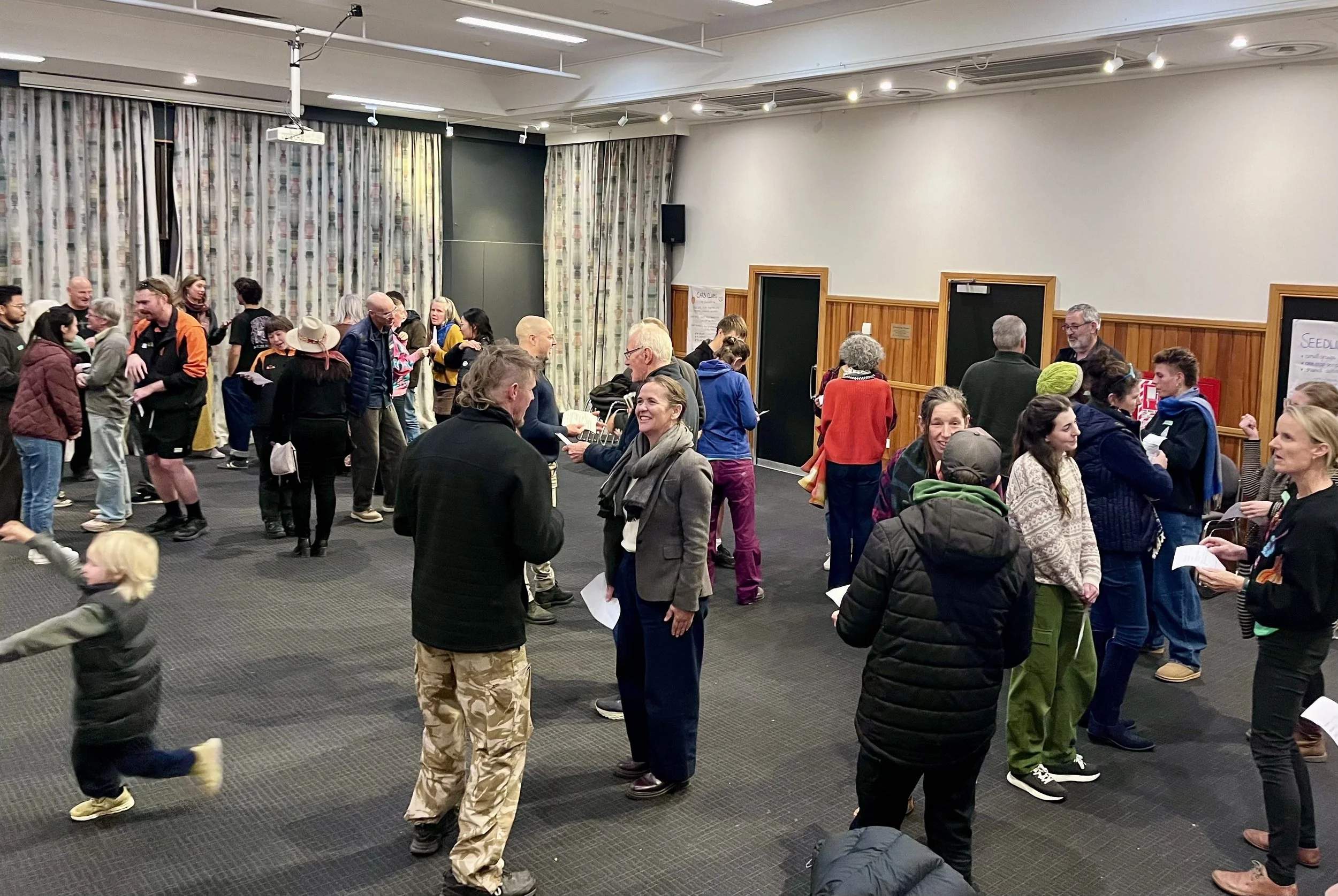
Speed Connect exercise during the Green Drinks Growing Local Food Networks.