
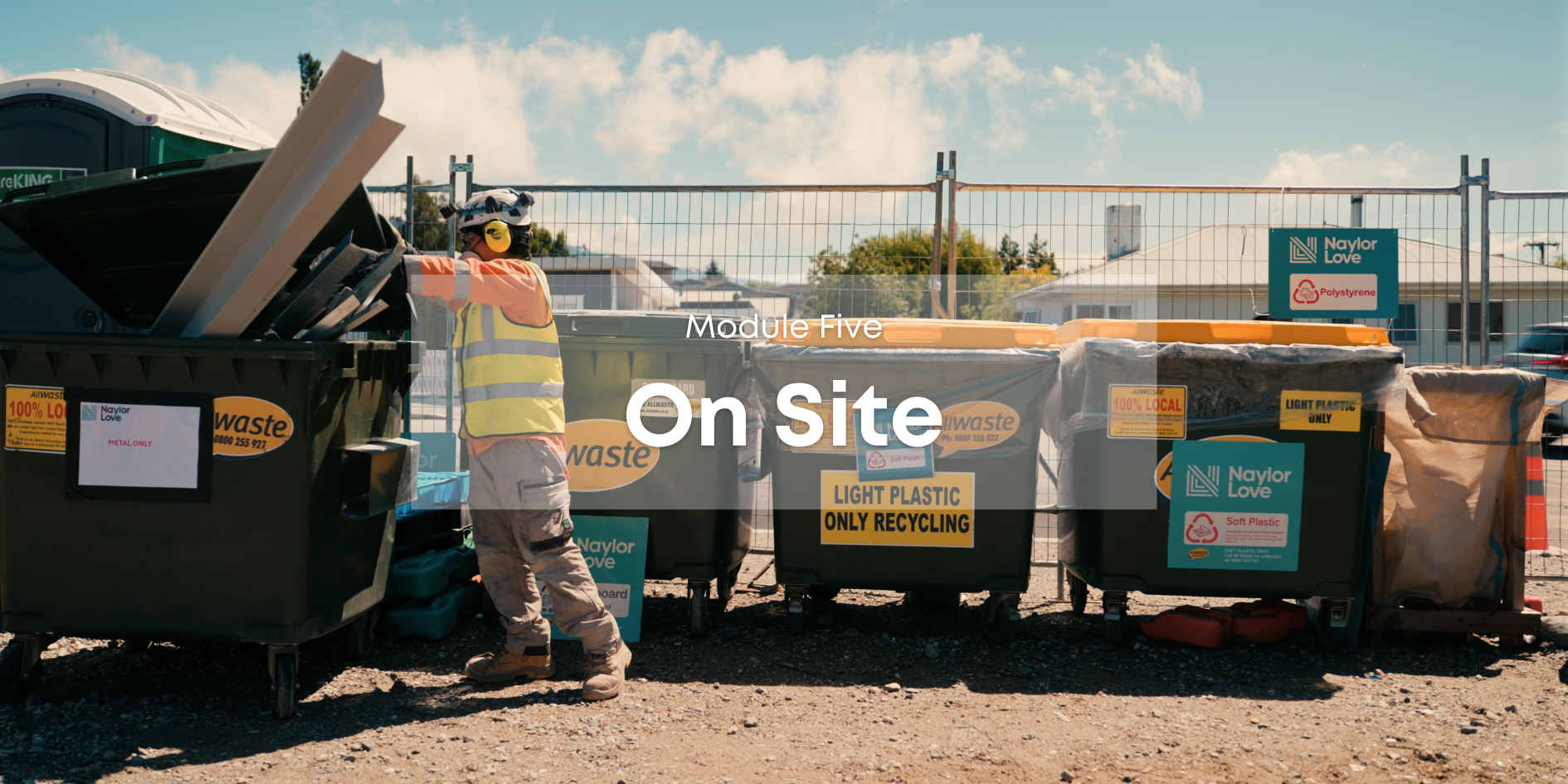
Module Five: On-Site
Contents
Video
Introduction
Why Care
Before Breaking Ground
On-Site
Resources/Links
Professional Development Points
Quiz
Video
Introduction
Your designs are complete and reviewed, on-time deliveries are scheduled, all your pre-planning boxes are ticked, and construction is ready to begin. But what on-site practices help you run a smooth, efficient site while still keeping waste and environmental impact low?
As highlighted in Module 4: Pre-Planning and Materials Selection, pre-planning is key to success. The same goes for on-site management. By the time construction starts, many of the biggest decisions that will impact the sustainability of your site should already have been made. Waste management, material storage, recycling systems, and environmental protection are all easier to implement when they're planned before work begins.
This module focuses on the practical on-site actions that help reduce waste, improve resource efficiency, protect the environment, and support better project outcomes throughout construction.
In this module you’ll learn about:
Site Waste Minimisation Plans (SWMPs);
Establishing an on-site sustainability lead;
Bin management, both before and after breaking ground;
Toolbox Talks and team engagement;
Reuse and material recovery practices;
Material protection and environmental controls; and
Building a site culture that supports sustainability goals.
Why Care
Good practical and sustainable on-site practices can be done for financial, personal, environmental, social, or any other number of reasons.
See the Module 1: Why Care video to see why better building matters to many local industry individuals.
No matter the reason, the on-site practices suggested in this module can help achieve more efficient work flow, save money, and help protect the environment.
For good on-site practices, it’s also a good idea to refer back to the circular economy principles outlined in Module 2: Circular Economy 101.
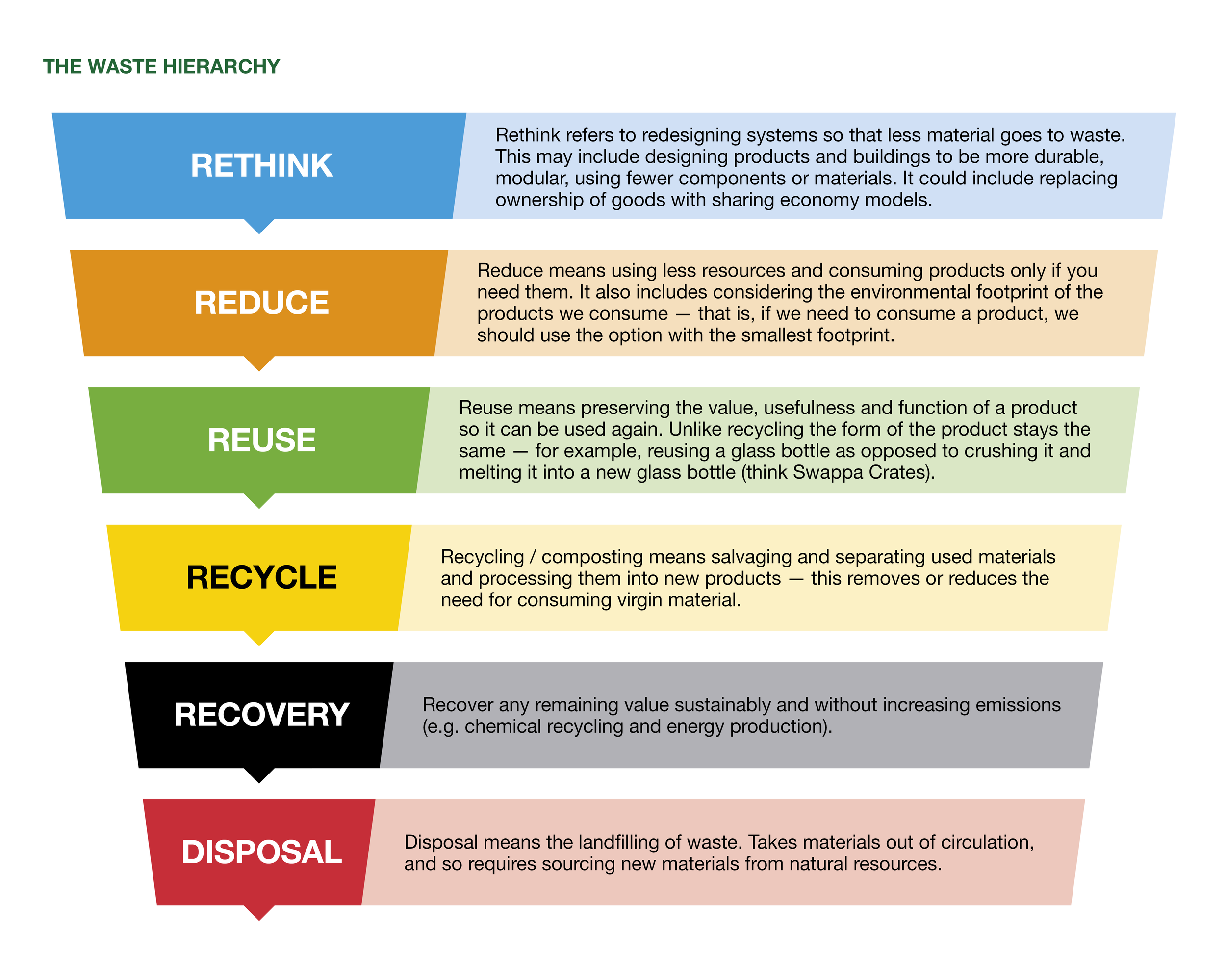
For example, while there’s plenty to think about on-site, a major focus is around waste reduction. Remembering that C&D makes up over 34% of all waste in the Queenstown Lakes District, we want to remember to:
REMEMBER
The Waste Hierarchy from Module 2: The Circular Economy 101
Avoid waste before it is created
Reduce waste created
Reuse materials where possible
Recycle materials that cannot be reused
Send only the remaining material to landfill
These practices not only help save money (labour, material costs, landfill fees, etc), but also significantly help reduce negative planetary impacts.
Before Breaking Ground
Before even breaking ground there’s a few things that can be done to improve on-site efficiency and sustainability.
Site Waste Minimisation Plans
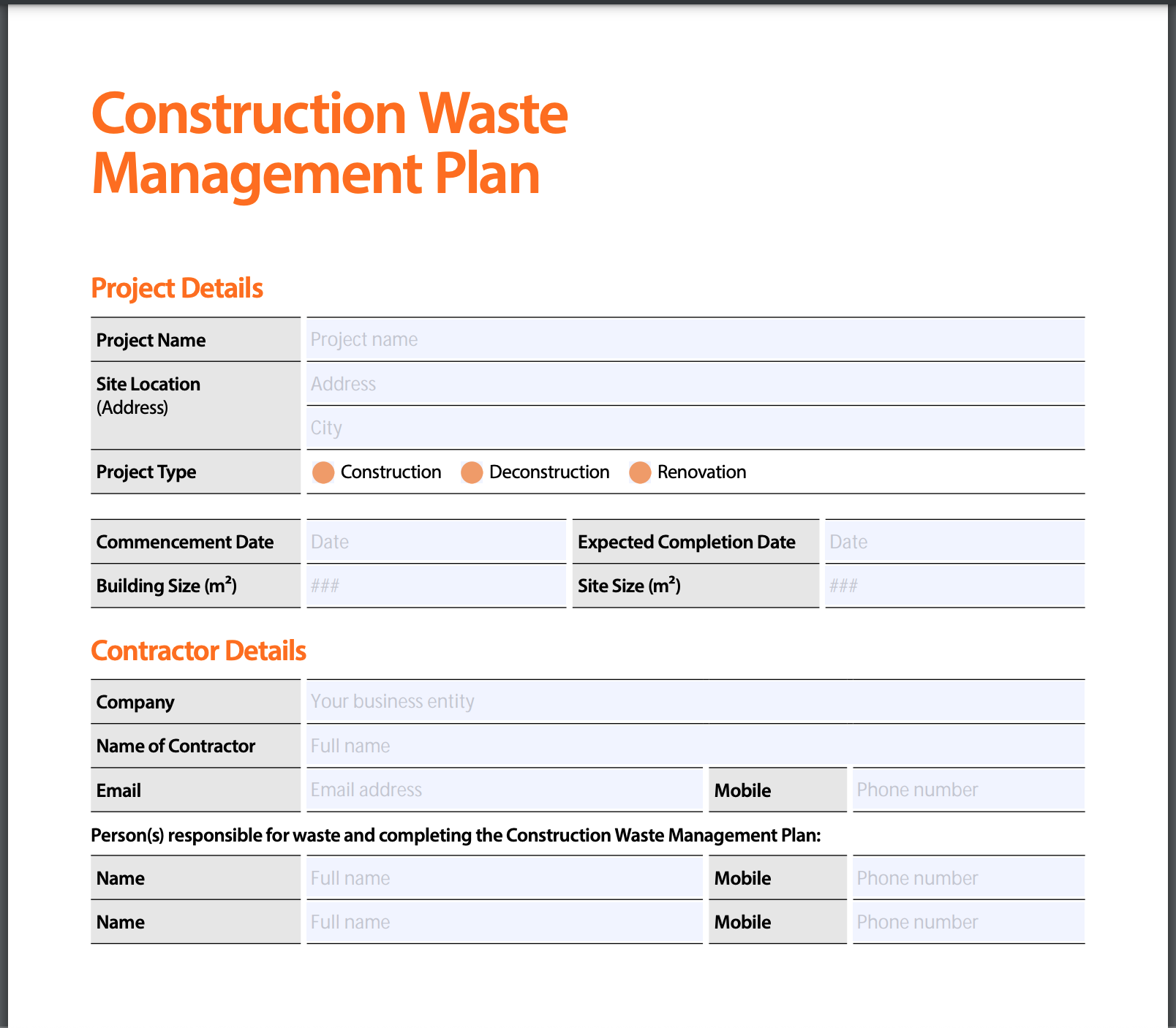
Site Waste Minimisation Plans (SWMP) are becoming increasingly common, and may soon be required by law. So why not start now and get familiar with this simple task.
What is a SWMP: A SWMP is a project specific document created during pre-planning to set out how you will manage waste on-site. Before a project begins you try to determine what waste streams will be generated, and how they will be managed.
Why use a SWMP: Completing a SWMP upfront helps identify material byproduct your project is likely to generate and the best opportunities to reduce, reuse, recycle, or divert them from landfill. It also means you're thinking about waste management before the project starts, rather than scrambling to deal with it once things get busy on-site.
SWMP’s help identify:
Expected waste streams
Reuse opportunities
Recycling and diversion options
Bin requirements
Collection arrangements
Diversion targets (i.e. 50% or 80% of material diverted from landfill)
Tracking and measuring*
Roles and responsibilities
*Tip: Waste service providers can help track and measure waste and recycling streams. The first time you use a SWMP, check how much material in a previous project was sent to landfill, and how much was recycled, and then you can set targets and try to build from that. Alternatively, check out BRANZ’s waste transfer plan to help track your waste streams.
Hitting all your SWMP targets the first time around is less important than going through the process of measuring and tracking, and understanding how it all works.
The more SWMPs you write, the easier they get. And don’t forget to celebrate when you start reaching – and even surpassing – your waste diversion goals.
For further guidance on how to use SWMP’s, including ready-to-use templates:
Check out BRANZ Developing a Waste Management Plan. Their template is a little more advanced, but widely used in New Zealand.
You can also check out the Mitre 10 Waste Management Plans webpage, which includes a handy short video. Their template is a bit less advanced and easier to use.
WasteHub have a great informational video on How to hack your waste management plan
On-Site Sustainability Lead
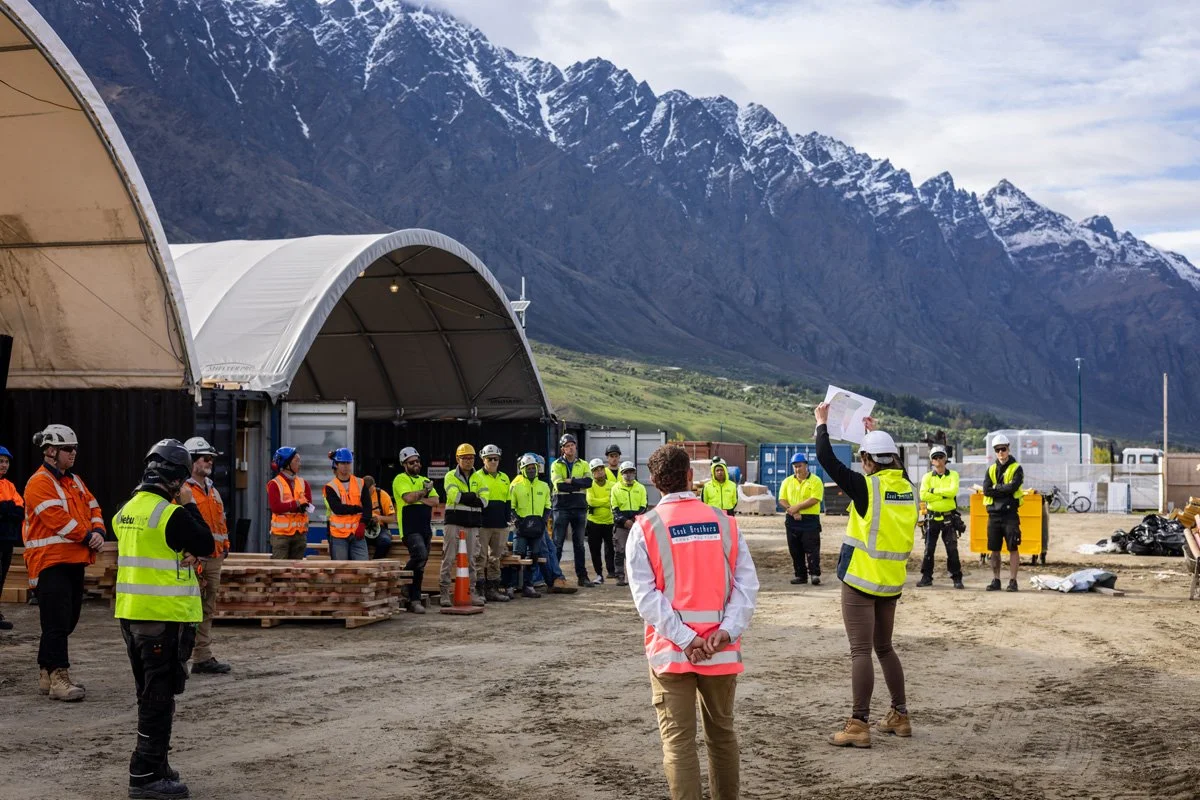
It’s important to select an on-site sustainability lead who will champion the sustainability goals you want to achieve on-site.
While there may be a dedicated sustainability role within larger companies, smaller operations can still champion sustainability by giving someone already on site the role as part of their duties.
It’s important that they are well supported and have all the tools to achieve the team’s sustainability goals. Duties can include making sure:
The site and team are working towards the SWMP;
There are proper sorting piles, and that they are maintained;
The site has all the right bins for waste and recycling (including in the lunch room!);
Materials are being put in the correct bins;
Materials are properly protected and stored; and
The site is set up to avoid unintended damage to the environment.
Responsibilities will vary from site to site, but maintaining these general practices will set you up for success. Sustainability goals are far more likely to be achieved when someone is responsible for championing them.
It’s also important that the whole team embraces the role of the sustainability champion. Making sure that the sustainability lead has full team support will help positive behaviours and actions trickle down to everyone on site. Check out Toolbox Talks below for more on this.
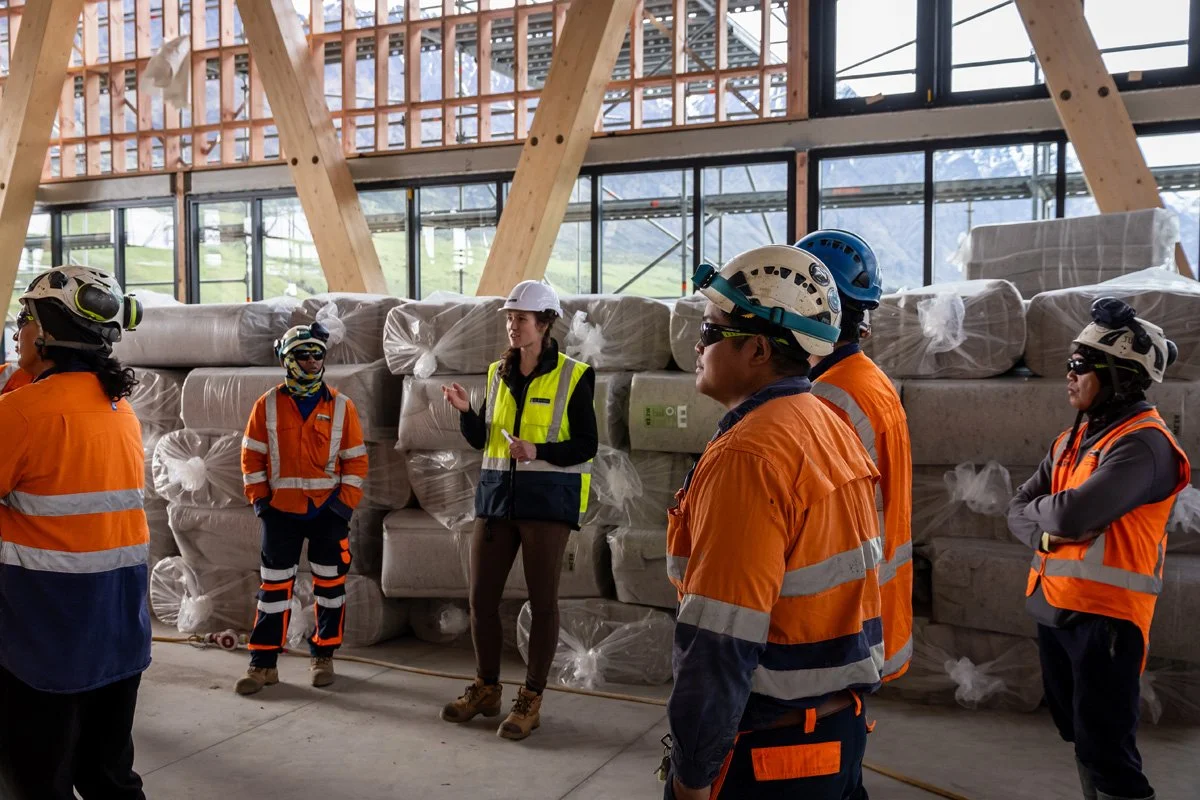
Pre-Planning Your Bin Setup
Similar to on-time deliveries, you’ll want to consider different bin set ups for different phases of a build. It’s best to plan this ahead of time, and if adjustments need to be made, they can easily be amended later down the track.
Having a plan and sharing it with your waste service provider ahead of time only helps the site run more efficiently.
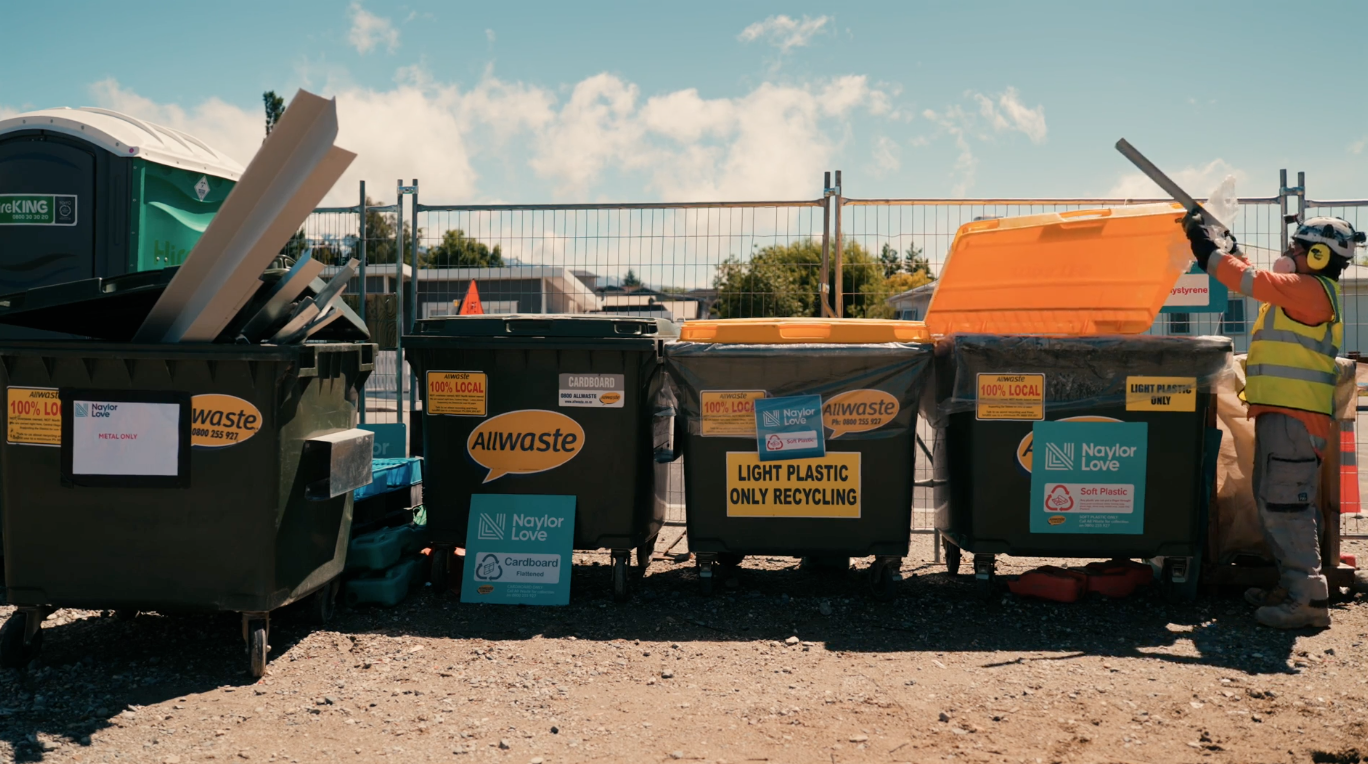
So, what bins do you need, and when do you need them?
Your SWMP will give you a good indication of what waste and material streams you expect to have throughout the build. Knowing when your on-time delivery orders are due and what materials will be used throughout each build phase gives a good indication of the quantity and intensity of those waste and material sources throughout the project.
Materials like cardboard and soft plastics are constantly used throughout a build, but maybe less so at the beginning compared to near the end when appliances are installed, resulting in excess packaging materials*. Consider working with your waste service provider to start with smaller bins or a simple fadge bag setup, then scaling up to larger bins as the project progresses.
On-Site
Once ground is broken and the project underway, there are several things to consider to keep the site running smoothly and sustainably.
Toolbox Talks
While having a sustainability lead is important, they can’t do it all on their own. It’s absolutely crucial to have the whole team on board, and anyone else coming on site such as subcontractors.
This is where toolbox talks come in.
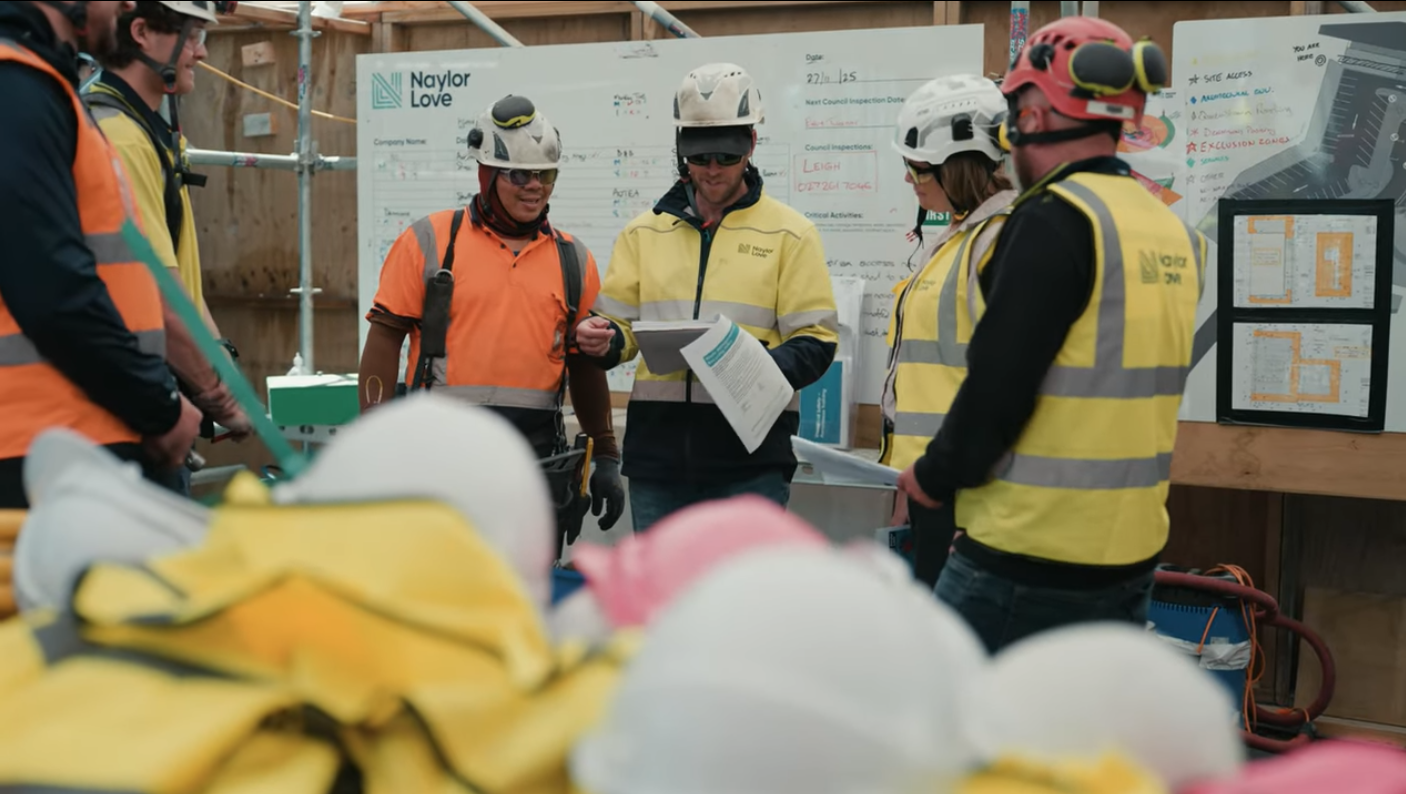
Toolbox talks not only help with project planning, but also to drive sustainability by getting the whole team on board with your goals and best practise, such as waste diversion, material sorting and reuse, and sustainable design.
Toolbox talks are great opportunities to explain to the team why you want to pursue your sustainability goals, and why they should too. When people understand why something matters, they're far more likely to support and follow it.
As the project progresses, so will on-site practices. So it’s important to keep the team up-to-speed with changes such as material deliveries, bin pick up or drop offs, or any practices that may change.
Hold toolbox talks at least weekly, and whenever significant changes occur on site such as new waste streams, major deliveries, new subcontractors, or changes to environmental controls.
Toolbox talks are also great opportunities to make sure your sustainability lead is backed up and supported by management; and that those on-site – whether team members or temporary subcontractors – know who the sustainability lead is, and to follow their lead.
In addition to pushing site education, it’s also a great way to build team morale. Get everyone together for a coffee, a bit of a chat, and possibly a bite to eat. You can even use these toolbox talks as an opportunity for training and upskilling – why not show the On Site training video and training module at your next toolbox talk!
Managing Your Bins On-Site
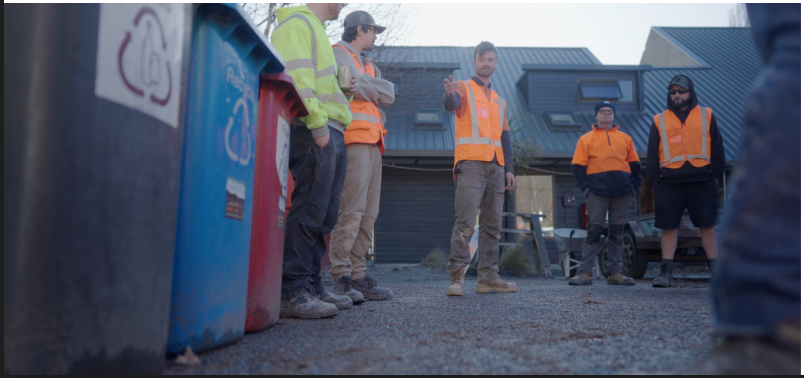
Tips for Recycling:
Polystyrene: Polystyrene can be recycled and remade into new polystyrene. But because it is lightweight and breaks apart easily, polystyrene causes significant harm to people and wildlife when it ends up off-site in waterways and the surrounding environment. Make sure your team knows how to recycle it properly, and to be careful when handling the material. Your dedicated polystyrene bin should be covered to prevent wind blow.
*Check out: The Polystyrene Problem
Plasterboard: In some places plasterboard can be remade back into plasterboard, as long as it’s not contaminated. Otherwise, it can be downcycled to make fertiliser. Either way, it doesn’t need to go in the waste bin, especially if it’s still clean.
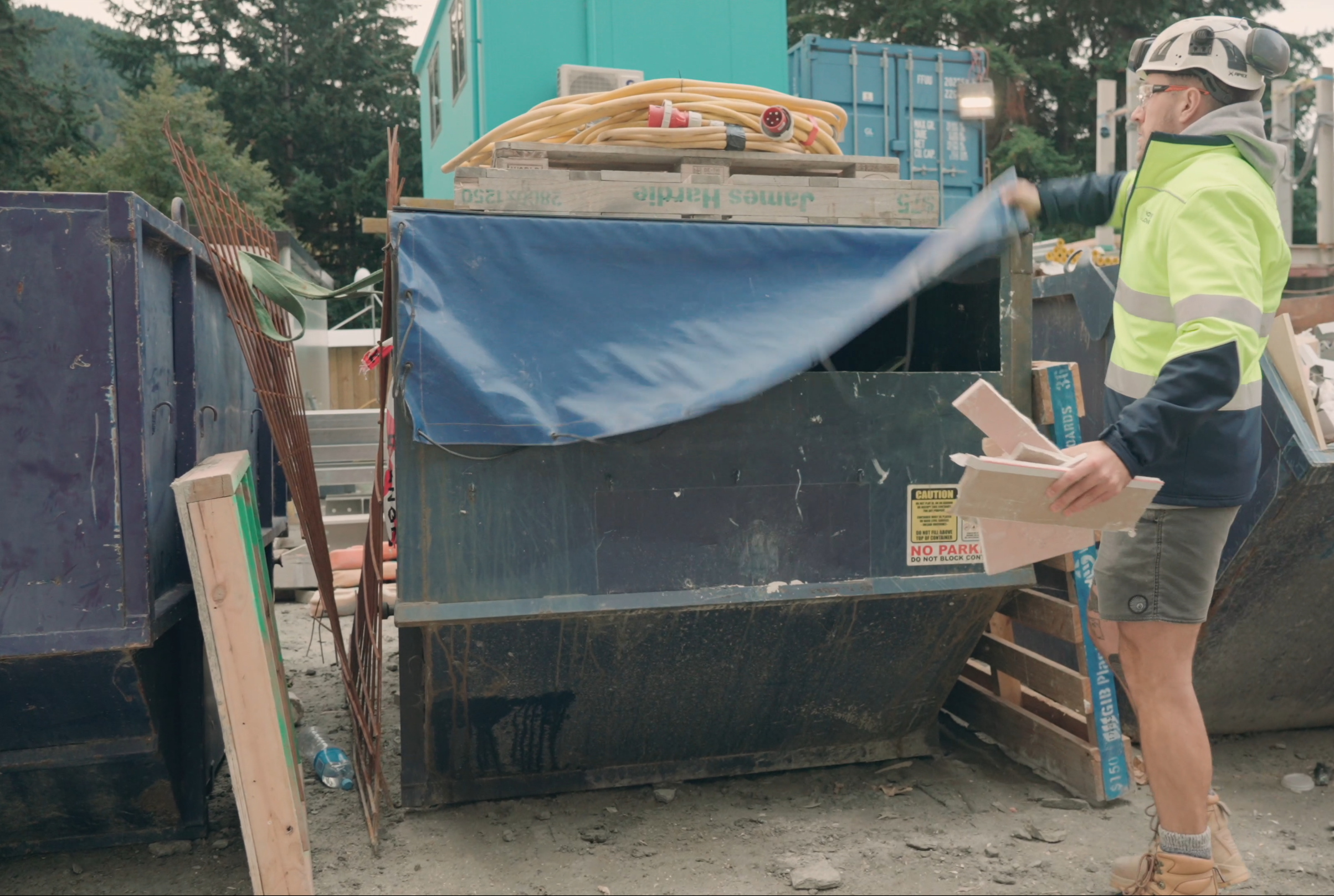
Metal: Metals have a large carbon footprint, requiring significant energy to manufacture. The good news – they can be recycled infinitely, meaning they can be made new over and over, also reducing the embodied carbon from manufacturing them new. Even better if you can reuse or repurpose metals in your build, before it reaches the recycling plant. Metals also have a high value, so you can get money back by recycling it – and maybe use the money generated to reward the team for recycling it in the first place.
*Tip: Incorrect or dirty materials ruin recyclable batches, leading to higher sorting costs and safety hazards for workers sorting the materials, and potentially causing entire truckloads to end up in the landfill. Likewise, recyclable materials put in the general waste skip end up in landfill.
If you’d like to learn more, check out Mitre 10’s Wast Sorting On-Site.
Reuse Sorting Piles
Recycling is important – but reuse is even better!
Timber is a good example of a material that can easily be reused, whether on the current project or a future one. While reducing timber off-cuts is important, sometimes it’s hard to avoid. Where possible, cut to sizes that can be reused elsewhere – 200mm, 400mm, or 600mm is recommended.
To effectively implement reuse on site, create dedicated reuse piles or bins, positioning them close to cutting areas so workers can quickly check for a suitable off-cut before cutting new pieces.
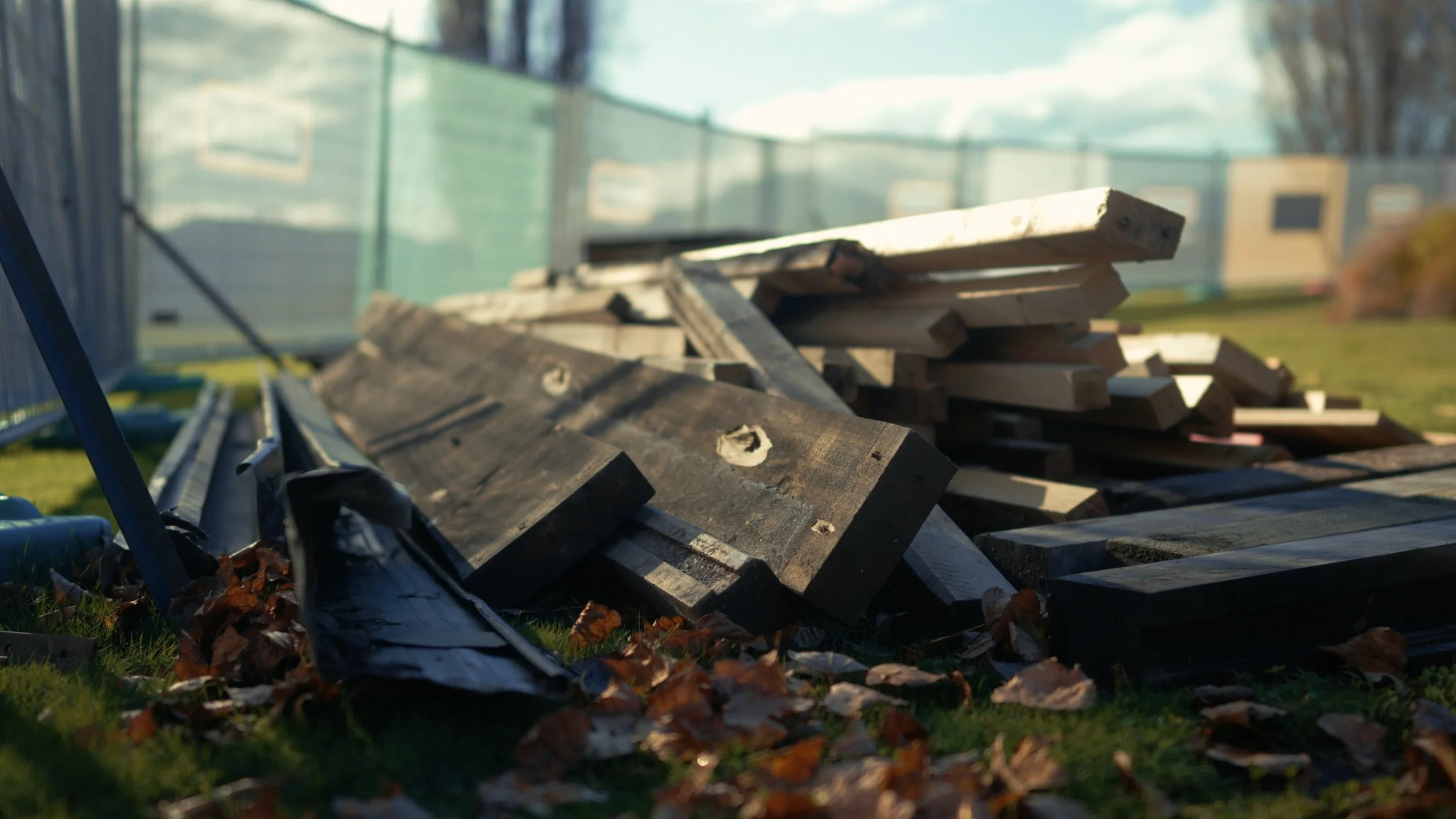
If off-cuts are unable to be reused on-site for some reason, consider storing them for future projects. Otherwise, consider local organisations or community projects that might be able to use your materials.
Untreated timber pieces also make for great firewood. Instead of chucking unusable pieces into the skip, think about putting together a firewood pile for the team to take home.
Every material reused on-site is one less piece that needs to be manufactured, purchased, delivered, handled, or disposed of. And there are plenty of materials that can be reused. Try to think ahead when selecting materials about which could be reused, and make it easy for your team to do it.
Materials Protection
While practices like on-time delivery orders will help prevent materials sitting around on site for long periods of time and getting damaged, there are other practices to help protect materials once on site.
While plastic wrapped deliveries are meant to help protect materials from damage, they are a huge source of waste and cause significant harm to the environment. Reusable tarps or temporary shelters can provide adequate protection, without the need for large amounts of single-use plastic packaging.
The entire industry can be pushing back against the use of single-use plastic wrapped material deliveries – check out Module 4: Materials Selection and Pre-Planning about talking to your suppliers about nude deliveries or packaging take-back schemes. And it isn’t just a problem for the building industry to solve – creative solutions can be found everywhere. There’s been some local instances where builders have been able to re-use business banners that would have been disposed of for material protection on-site.
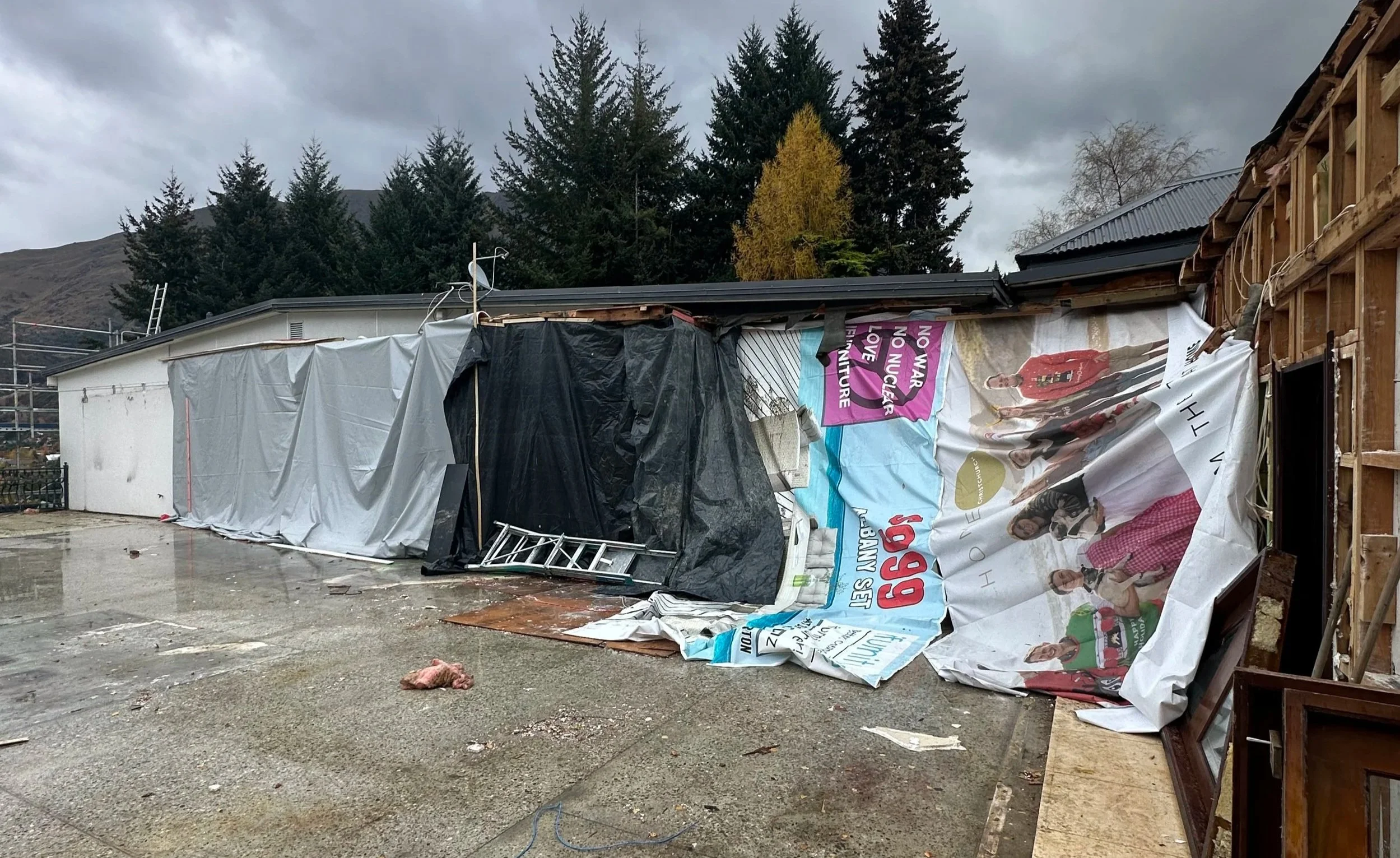
If the project has a long timeframe or will be undergoing wet conditions, temporary structures (like sheds) can be used to protect materials. Even better, why not use timber off-cuts to build an on-site structure?
Unused materials that get damaged is another, very avoidable, source of material waste. If stored and protected properly, they can continue to be put to use, even after a project is finished. Most suppliers will even take back unused and undamaged materials at the end of a project.
Here are some practical tips for protecting materials on-site:
Keep materials off the ground;
Keep materials under storage away from rain and wind;
Use reusable tarps or temporary shelters; and
Return unused and undamaged materials where possible.
Environmental Site Management
Construction sites can have a significant impact on the surrounding environment if they are not properly managed. Sediment and silt can enter stormwater systems, rubbish and plastics can leave the site, contaminated water can run off into nearby areas, and dust and airborne materials can spread beyond the site boundary. Improper storage of materials and chemicals can also lead to pollution and unnecessary environmental harm.
A well-organised site helps minimise these risks. Good site setup includes installing perimeter barriers and sediment controls, establishing clearly defined waste and recycling areas, protecting stored materials from damage and contamination, creating controlled cutting zones with appropriate dust management, maintaining regular housekeeping and clean-up practices, and protecting nearby drains, waterways, and public spaces throughout the project.
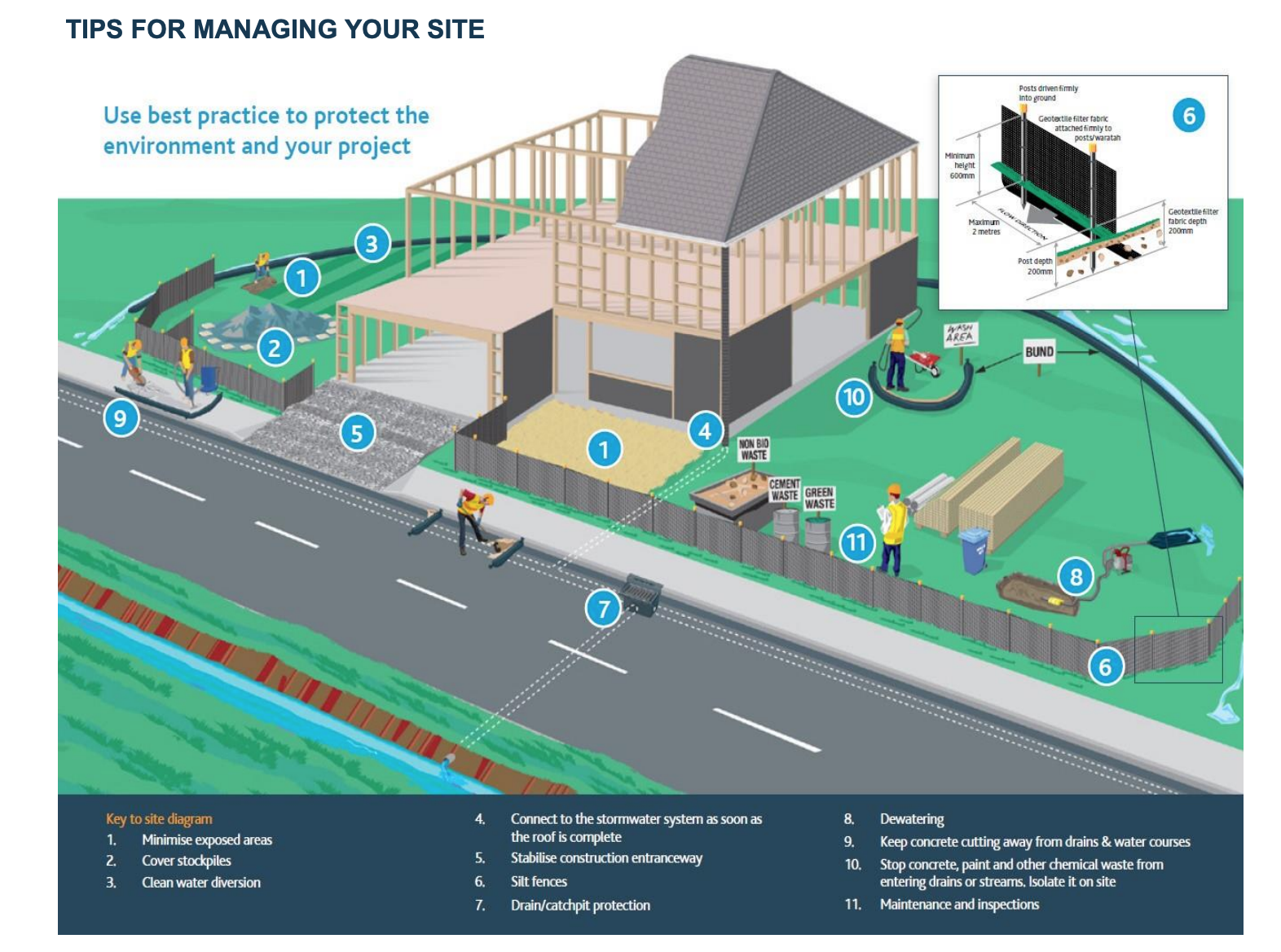
The above image from QLDC’s environmental site management document is an excellent illustration of how a site can be set up to protect the local environment.
The Southern Lakes is known for its natural beauty. Not only does site run-off directly affect that, but our stormwater drains typically go straight into our lakes and main source of drinking water.
While not shown in the image, it’s also helpful to have an enclosed cutting zone to prevent materials from getting out. Having a vacuum handy and the team informed to vacuum and clean up after cutting or at the end of the day are also good practices.
Preventing runoff, litter, and sediment from leaving the site should always be a priority. Once contaminants enter the environment, recovery becomes significantly more difficult and costly.
Encourage Your Team
Support your team with lunches, BBQ’s or other ways to recognise their efforts in helping reach sustainability goals on-site. Achieving more sustainable behaviours on-site takes a collective effort, and rewarding people for doing well makes a real difference. Recognition not only helps the team buy into the goals, it builds morale – everyone feels the win, and that momentum carries into other areas and future projects.
Consider using the funds generated from recycling your metals to put on team shouts – this not only helps encourage the team to buy into your recycling goals, but also helps build a positive team culture.
Conclusion
Sustainable construction is not achieved through a single recycling bin or one toolbox talk. It's the result of hundreds of small decisions made before and during construction.
Planning ahead, making sustainability easy for the team to follow, tracking and measuring progress is all key to success. When waste is reduced before it is created, materials are protected and reused, recycling systems are well organised, and the whole team understands the goals, sustainability becomes part of how the site operates.
The goal isn't perfection on day one – it's continuous improvement, measuring performance, learning from each project, and applying those lessons to the next.
Resources/Links
Professional Development Points
Completing this training module is eligible for professional development points. To complete the module, make sure you have:
Watched the short video
Read the webpage content
Checked out the links and resources on the page
Completed the quiz
Licensed Building Practitioner Points:
Available to all participants. Log your points directly after completing the module — 1 hour of learning equals 1 LBP point. This module is estimated at 1 hour.
Continuing Professional Development Points:
Available to NZIA members only. This module is eligible 10 CPD points. Once you submit your quiz, NZIA will be notified.